

Table of Contents
- Buying Prescription Drugs Without Insurance: Your Complete Options
- Using Prescription Discount Cards to Lower Out-of-Pocket Costs
- Patient Assistance Programs: Direct Help from Drug Manufacturers
- Generic vs. Brand Name Drugs: Understanding Cost Differences
- Community Health Clinics and Sliding Scale Services
- Negotiating Cash Prices at the Pharmacy Counter
- Online Pharmacy Platforms and International Options
- Emergency Medication Access When Buying Without Insurance
Buying Prescription Drugs Without Insurance: 7 Ways to Save
Last Updated: July 25, 2026
Buying prescription drugs without insurance is a reality for millions of Americans, and the costs can feel overwhelming. Whether you've lost coverage, work for an employer that doesn't offer health benefits, or simply can't afford premiums, you have more options than you might think. At Chemistway, we understand the challenge of managing medication costs without insurance protection, and we've compiled practical strategies that actually work.
The gap between what uninsured patients pay and what insured patients pay for the same medication can be staggering. A single prescription that costs an insured patient $15 after a copay might run $150 or more at the retail pharmacy counter for someone without coverage. But here's what most people don't realize: the pharmacy counter price is rarely the final word. Below, we'll walk you through seven concrete strategies for buying prescription drugs without insurance that can cut your medication costs by 50%, 70%, or even more.
Using Prescription Discount Cards to Lower Out-of-Pocket Costs
Prescription discount cards are membership-free programs that negotiate rates with pharmacies on your behalf. When you present the card at the pharmacy, you access discounted pricing that's typically 10-40% lower than the retail price. Unlike insurance, there's no application process, no waiting period, and no coverage denials.
Discount cards function as negotiation tools that reduce the pharmacy's standard retail price, while insurance shares the cost through copays or coinsurance. Popular platforms like GoodRx, SingleCare, and BuzzRx partner with major pharmacy chains including Walgreens, CVS, Walmart, and independent pharmacies. You simply enter your medication name and dosage, see which local pharmacy offers the lowest discount, and present the card at checkout. Many cards are free and available instantly through smartphone apps.
Patient Assistance Programs: Direct Help from Drug Manufacturers
Patient assistance programs (PAPs) are underutilized resources run by pharmaceutical manufacturers themselves. These programs provide free or significantly reduced medications directly to eligible patients who can't afford them. When you qualify for a PAP, the manufacturer ships your medication directly to you or your doctor's office at no cost.
Drug manufacturers created these programs to ensure that cost doesn't prevent patients from taking necessary medications. Qualifying typically requires proof of income and citizenship, but income thresholds are often generous, many PAPs accept applicants earning up to 200-400% of the federal poverty level. Your doctor can help initiate the application, or you can apply directly through the manufacturer's website. The application process usually takes 5-10 business days.
PAPs only help if your specific medication has a manufacturer-sponsored program. Brand name drugs almost always do; generics rarely do. If you're taking a brand name medication for a chronic condition, searching for the manufacturer's PAP should be your first move before paying full retail price.
Generic vs. Brand Name Drugs: Understanding Cost Differences
Generic medications are chemically identical to brand name drugs but cost a fraction of the price. The FDA requires all generic drugs to have the same active ingredient, strength, dosage form, and route of administration as their brand name counterparts.
Brand name drug manufacturers invest billions in research, clinical trials, and FDA approval, costs that get built into the price. Once the patent expires, generic manufacturers can produce the same drug without repeating those expensive steps. They skip the marketing campaigns and brand building, translating efficiency directly to lower prices for patients.
The FDA requires bioequivalence testing, which proves that generics reach the bloodstream at the same rate and concentration as the brand name drug. When buying prescription drugs without insurance, asking your doctor or pharmacist for the generic version should be automatic. For most medications, the generic is available and costs 50-80% less than the brand name.
Community Health Clinics and Sliding Scale Services
Community health centers provide primary care, prescriptions, and medication management on a sliding fee scale based on your income. These federally qualified health centers (FQHCs) exist in nearly every community and serve uninsured and underinsured patients as a core mission.
The Health Resources and Services Administration (HRSA) maintains a searchable database of all federally qualified health centers. You can search by zip code and find clinics near you, their hours, and services offered. Many clinics offer same-day appointments and accept walk-ins. At a community health center, you'll see a primary care provider who can write prescriptions and discuss medication options with you directly.
Many community health centers now offer video visits, which reduces overhead costs and makes care more accessible. Some telehealth platforms specifically serve uninsured patients and offer flat-rate consultations that include a prescription if needed. This is particularly useful for routine refills or managing chronic conditions.
Negotiating Cash Prices at the Pharmacy Counter
Most people don't realize that pharmacy prices are negotiable. The retail price displayed on the pharmacy computer is a starting point, not a final offer. Pharmacists have discretion to offer discounts, especially for uninsured patients who ask directly.
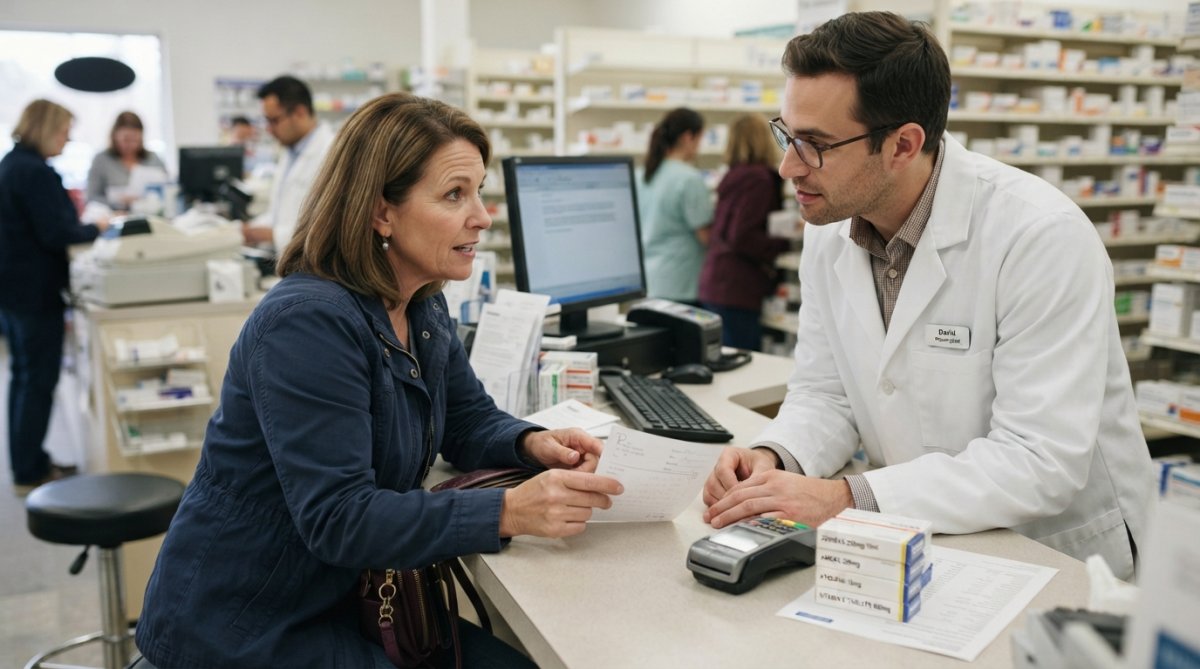
Step-by-step negotiation script:
- After your prescription is filled, ask the pharmacist: "What's the cash price for this medication?"
- If the price seems high, ask: "Do you have any discounts available for uninsured patients?"
- If they mention a discount program, ask: "Can you check GoodRx, SingleCare, and BuzzRx to see which gives the best price?"
- If the pharmacist is willing, ask: "Can you match the lowest price I found?"
- If they can't match, ask: "Is there a generic version available?" or "Would a 90-day supply cost less per dose?"
Most pharmacists will work with you because they want to help patients access medications. Call three pharmacies with your prescription and ask for their cash price before filling. Prices vary wildly between locations, even for the same chain. Once you know the lowest price in your area, you have leverage to negotiate with your preferred pharmacy.
Online Pharmacy Platforms and International Options
Online pharmacies and international pharmacy services offer significantly lower prices than U.S. retail pharmacies, but they come with important legal and safety considerations.
U.S.-licensed online pharmacies (those that require a valid U.S. prescription from a licensed physician) are legal and regulated by state pharmacy boards. International pharmacies operate in a legal gray area for U.S. residents. The key legal requirement is a valid prescription from a licensed U.S. physician. Your doctor must write a prescription specifically for an online pharmacy, and many doctors are reluctant to do this because they're unfamiliar with the process.
The National Association of Boards of Pharmacy (NABP) maintains a list of verified online pharmacies that meet legal and safety standards. Before ordering from any online pharmacy, verify that it's NABP-accredited or licensed by your state pharmacy board. Look for red flags: no prescription requirement, prices that seem impossibly low, no contact information, or poor website security.
Legitimate online pharmacies will require you to upload a valid prescription, verify your identity, and provide a real address. They'll also provide a licensed pharmacist for consultation. Shipping takes 1-3 weeks for international orders, so online pharmacies work best for maintenance medications you take regularly, not urgent prescriptions.
Emergency Medication Access When Buying Without Insurance
When you need medication urgently and don't have insurance or time to navigate discount programs, emergency access options exist to bridge the gap.
If you're in acute distress and need medication immediately, an urgent care visit or ER visit might be necessary. Once you receive an emergency prescription, you can then use the discount strategies above to fill it affordably. For less urgent but time-sensitive needs, many pharmacies offer emergency supplies. If you've run out of a maintenance medication, a pharmacist can often provide a 3-7 day emergency supply while you arrange a prescription and explore discount options.
90-day supplies and maintenance medication planning reduce your per-dose costs and create predictability. Many discount programs and online pharmacies offer lower per-unit pricing for 90-day supplies compared to 30-day supplies. Plan ahead for maintenance medications by starting the refill process when you have 1-2 weeks of medication remaining. This gives you time to compare prices, apply for PAPs, or order from online pharmacies without running out.
Comparing Your Options: Which Strategy Works Best
Different situations call for different approaches. Here's a quick reference to help you choose:
| Situation | Best Strategy | Why |
|---|---|---|
| One-time acute prescription | Discount card (GoodRx/SingleCare) | Instant, free, no application |
| Chronic condition, brand name medication | Patient Assistance Program | Free medication directly from manufacturer |
| Routine prescription, any medication | Generic + negotiation | Lowest total cost with minimal effort |
| No nearby pharmacy, routine refills | Online pharmacy | Convenience and lower per-dose cost for bulk orders |
| Urgent need, no time to plan | Community health clinic or urgent care | Immediate access to doctor and medication |
| Limited income, multiple medications | Community health center sliding scale | Comprehensive care plus medication help |
Managing medication costs without insurance is challenging, but you're not helpless. The strategies above represent real, proven ways that uninsured patients reduce their medication expenses by 50-80%. Start with the easiest option for your situation: a discount card for an immediate prescription, or a PAP application if you're taking a brand name medication long-term.
For patients seeking additional support, Chemistway offers an alternative approach: access to certified pharmacists 24/7, automatic refills delivered directly to your door, and generic medications at significantly reduced costs compared to retail pharmacies. Whether you choose Chemistway or another strategy from this guide, the key is taking action today rather than paying full retail price tomorrow. Create a free account and explore how much you could save on your current medications.
Frequently Asked Questions
Can I legally buy prescription drugs without insurance?
Yes, you can legally purchase prescription drugs without insurance in the United States. You'll pay the cash price directly to the pharmacy instead of using insurance coverage. Many uninsured and underinsured patients use discount cards, patient assistance programs, or negotiate prices at retail pharmacies. Online licensed physicians can also issue prescriptions for uninsured patients through telehealth services, though you'll cover the consultation and medication costs out-of-pocket.
What's the cheapest way to get prescriptions without insurance?
Patient assistance programs (PAPs) from drug manufacturers often offer the lowest costs, sometimes free medications for qualifying uninsured patients. Prescription discount cards like GoodRx, SingleCare, and BuzzRx typically save 30-60% on retail prices. Generic drugs cost significantly less than brand names and are therapeutically equivalent. Community health clinics offer sliding scale fees based on income. Comparing pharmacy prices across retailers and negotiating cash prices can also yield substantial savings on maintenance medications and refills.
How do prescription discount cards work compared to insurance?
Discount cards negotiate reduced rates with pharmacies and don't require enrollment or medical underwriting, you get instant savings. Unlike health insurance with deductibles and copays, discount cards work immediately and apply to every prescription. They're free or low-cost to use. However, they don't cover the full cost like insurance might after meeting a deductible. Discount cards work best for routine medications; patient assistance programs may offer better savings for expensive drugs. You can use multiple discount cards to find the best price for each prescription.
Are generic drugs as effective as brand name medications?
Yes. Generic drugs contain the same active ingredient and must meet FDA standards for therapeutic equivalents, meaning they work identically to brand-name drugs. The only differences are typically the inactive ingredients, appearance, and cost. Generics cost 70-90% less because manufacturers don't repeat clinical trials or pay for brand marketing. If your licensed physician prescribes a generic medication, it's safe and effective. Always ask your pharmacist if a generic version is available, it's often the fastest way to reduce out-of-pocket costs on maintenance medications.
This article was written using GrandRanker


0 comments