

Table of Contents
- How Online Pharmacists Review Prescriptions: The Complete Process
- Step 1: Verify Prescription Authenticity and Patient Identity
- Step 2: Perform Drug Interaction Screening and Dosage Validation
- Step 3: Check for Contraindications and Therapeutic Duplication
- How to Verify a Legitimate Online Pharmacy Before Submitting Your Prescription
- The Pharmacist Medication Review Process: What Happens Behind the Scenes
- How to Identify a Rogue Online Pharmacy and Protect Yourself
- Patient Checklist: Ensuring Prescription Accuracy in Your Online Order
Last Updated: August 10, 2026
How Online Pharmacists Review Prescriptions: The Complete Process
Online pharmacists review prescriptions through systematic clinical evaluation using digital tools and secure messaging to verify authenticity, screen for drug interactions, and ensure patient safety. At Chemistway, we've built our operation around this core function, ensuring every prescription receives thorough professional review before dispensing.
The process mirrors in-person pharmacy practice but leverages digital infrastructure. While traditional pharmacies handle prescriptions in person, online pharmacists conduct identical clinical checks using digital prescription verification systems, electronic health records integration, and real-time drug interaction databases.
Understanding what happens behind the scenes helps you trust the process and use online pharmacy services confidently. Below, we'll walk you through each step of how online pharmacists review prescriptions, what safeguards protect you, and how to distinguish legitimate operations from rogue services.
What Makes Digital Review Different From In-Person
Digital prescription review follows the same clinical standards as traditional pharmacy, optimized for remote delivery. An in-person pharmacist reviews 100+ prescriptions daily while managing a storefront; an online pharmacist reviews prescriptions in a dedicated clinical environment with access to more detailed patient history through secure digital systems.
Digital review offers a critical advantage: pharmacists can consult patient records more thoroughly. When you use Chemistway, your medication history, allergies, and previous prescriptions are stored securely and accessible during review, enabling faster, more accurate screening for therapeutic duplication and contraindications.
State boards of pharmacy, the FDA, and the DEA require that online pharmacists hold valid licenses and conduct reviews meeting the same standards as retail pharmacists.
Step 1: Verify Prescription Authenticity and Patient Identity
The first action an online pharmacist takes is confirming the prescription is legitimate and matches the patient requesting it. This prevents fraud, medication diversion, and ensures the right medication reaches the right person.
Prescription verification involves contacting the prescriber directly through secure channels, phone, fax, or electronic prescriber networks. The pharmacist confirms the prescription was issued by a licensed physician, nurse practitioner, or physician assistant; the patient name, dosage, and medication match the prescriber's records; no prior authorization issues exist; and the prescription hasn't been filled elsewhere through state prescription drug monitoring programs.
Patient identity verification happens simultaneously through government-issued ID, date of birth, and other identifiers. Chemistway and other accredited online pharmacies use secure messaging and encrypted portals to collect this information, meeting HIPAA requirements. The verification process typically takes 24-48 hours for standard prescriptions.
Step 2: Perform Drug Interaction Screening and Dosage Validation
Once the prescription is verified as authentic, the pharmacist moves to clinical review, where the pharmacist's expertise directly protects your health.
Drug interaction screening uses FDA-approved clinical databases that flag potential problems between your new medication and anything else you're taking. The system catches medications that reduce each other's effectiveness, drugs that increase side effects when combined, substances that interact dangerously, allergies that would contraindicate the medication, and age-related dosing concerns.
Dosage validation ensures the prescribed amount is appropriate for your condition, age, weight, and kidney/liver function. A pharmacist might flag a dose that's too high for an elderly patient or too low to be therapeutic. If dosage seems incorrect, the pharmacist contacts the prescriber to clarify or request adjustment before dispensing.
At Chemistway, our certified pharmacists have access to clinical support systems and can consult with other specialists if needed.
Step 3: Check for Contraindications and Therapeutic Duplication
Beyond simple drug interactions, pharmacists screen for contraindications, situations where a medication is unsafe for you, and therapeutic duplication, where two medications do the same job.
Contraindications are medical conditions that make a medication dangerous, including pregnancy, liver or kidney disease, heart conditions, uncontrolled diabetes or hypertension, recent surgeries, and active bleeding disorders. The pharmacist reviews your medical history to identify these red flags. If a contraindication exists, the pharmacist holds the prescription and contacts the prescriber.
Therapeutic duplication occurs when you're prescribed two medications treating the same condition. The pharmacist flags these and contacts the prescriber to confirm intent. A patient filling prescriptions at multiple pharmacies might not realize they're taking two medications that interact dangerously; an online pharmacy consolidating your prescription history catches these issues automatically.
How to Verify a Legitimate Online Pharmacy Before Submitting Your Prescription
Before trusting an online pharmacy with your prescription, verify its credentials. Rogue pharmacies skip safety steps to cut costs, while legitimate operations are transparent about accreditation and licensing.
Check for state pharmacy board licensure. Every online pharmacy must be licensed in the state where it operates. Visit your state's pharmacy board website and search for the pharmacy's name.
Look for NABP or URAC accreditation. The National Association of Boards of Pharmacy (NABP) operates the Verified Internet Pharmacy Practice Sites (VIPPS) program. Pharmacies passing VIPPS verification meet rigorous standards for prescription review, patient privacy, and medication dispensing. These seals indicate the pharmacy has passed independent audits.
Verify the pharmacist's credentials. The pharmacy should list pharmacist names and license numbers. Cross-reference these against your state's pharmacy board database to confirm active licenses.
Check for secure data handling. The website should use HTTPS encryption (look for the padlock icon) and have a clear privacy policy explaining how your data is protected.
Review customer feedback carefully. Look for reviews on independent sites that include specific details about delivery times, customer service responsiveness, and prescription accuracy.
Confirm prescriber contact protocols. Ask how the pharmacy verifies prescriptions with your doctor. Legitimate operations contact prescribers directly and maintain verification records.
The Pharmacist Medication Review Process: What Happens Behind the Scenes
The clinical review process follows a standardized sequence designed to catch safety issues before medication reaches you.
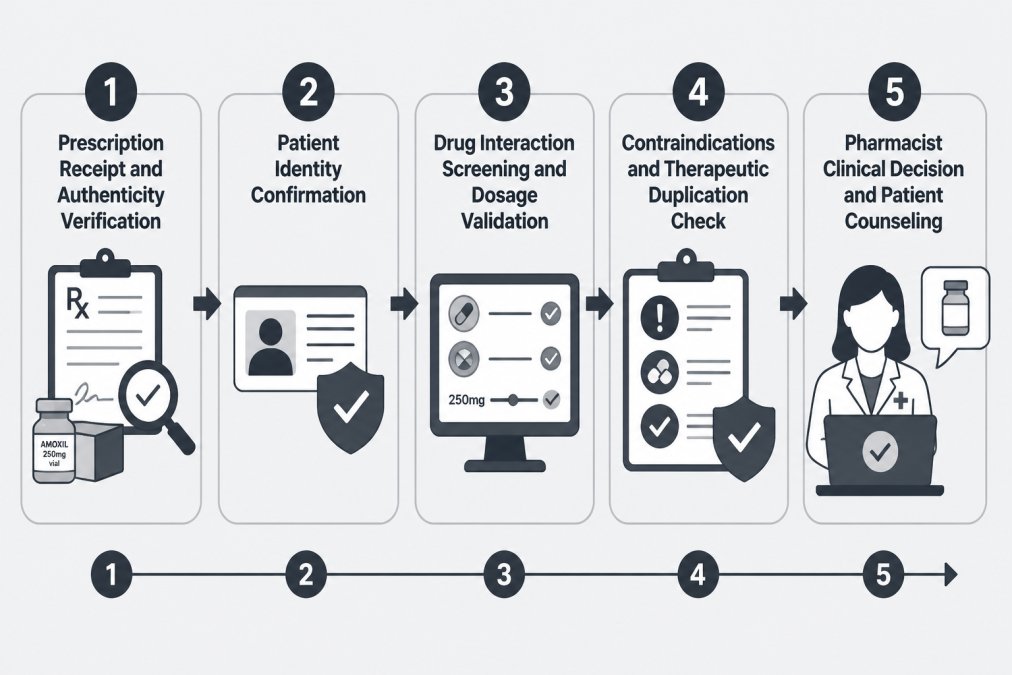
Step 1: Prescription receipt. Your prescription arrives through secure upload, fax, or direct integration from your prescriber's electronic health record system.
Step 2: Identity verification. The pharmacist confirms your identity matches the prescription through government ID and cross-referencing your patient profile.
Step 3: Drug interaction screening. Your current medications, supplements, and allergies are entered into clinical databases. The system generates interaction reports that the pharmacist reviews to determine severity.
Step 4: Dosage and clinical appropriateness review. The pharmacist checks whether the prescribed dose is appropriate for your age, weight, kidney function, liver function, and medical conditions.
Step 5: Final clinical decision and patient counseling. Once all checks pass, the pharmacist approves the prescription for dispensing. Chemistway offers consultation calls or secure message exchanges where the pharmacist counsels you on how to take the medication, expected side effects, and when to seek medical attention.
Medication Therapy Management and Patient Counseling
Medication therapy management (MTM) is a clinical service where pharmacists review your entire medication regimen to optimize outcomes and minimize side effects. The pharmacist identifies interactions or duplications, assesses whether your regimen aligns with your medical conditions, recommends adjustments if appropriate, educates you on proper medication use, and monitors for side effects.
Patient counseling is mandatory for every prescription. The pharmacist explains how to take the medication, expected effects, potential side effects, drug interactions with foods or supplements, when to contact your doctor, and storage requirements. Chemistway provides counseling through secure messaging, phone consultations, or video calls.
How to Identify a Rogue Online Pharmacy and Protect Yourself
Not all online pharmacies follow the same standards. Rogue operations cut corners on safety to maximize profit.
Red flags that indicate an illegitimate pharmacy:
- No prescription required
- No licensed pharmacist available for consultation
- Dramatically lower prices than competitors
- Website doesn't display pharmacy license or accreditation
- No secure data encryption
- Vague contact information
- Pressure to buy large quantities or subscribe to automatic refills
- Unsolicited emails offering prescriptions
- No verification of prescriber information or patient identity
- Shipping from countries with minimal pharmaceutical regulation
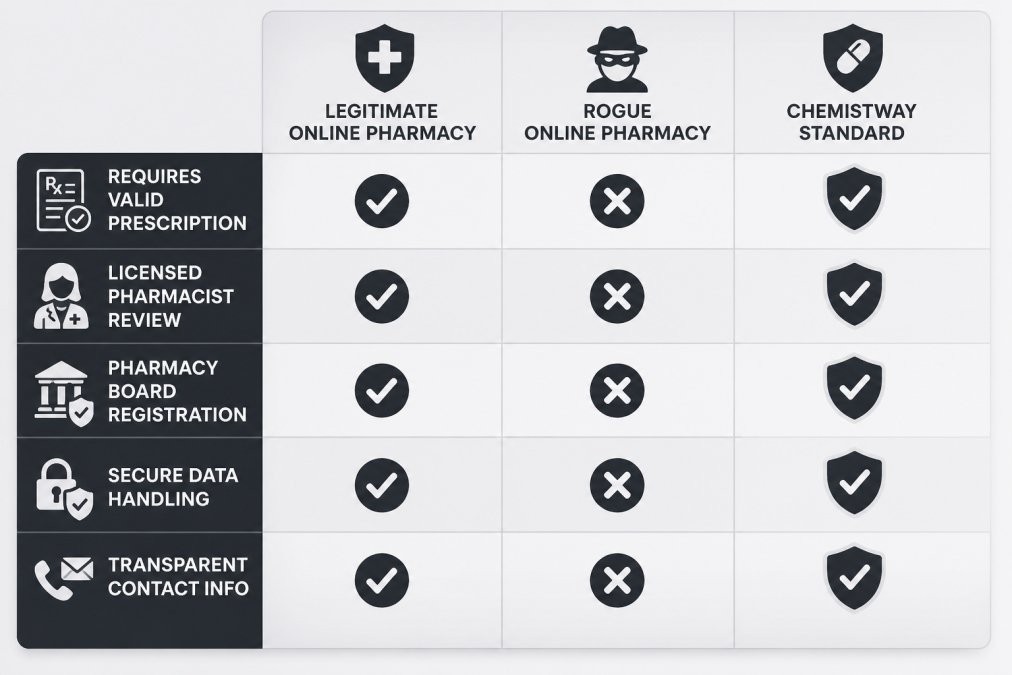
How to protect yourself:
- Use only NABP-accredited pharmacies (search the VIPPS directory at NABP's Verified Internet Pharmacy Practice Sites directory)
- Verify the pharmacy's state license before submitting any information
- Check that a licensed pharmacist is available for consultation
- Never provide payment information until you've confirmed legitimacy
- Use credit cards rather than wire transfers
- Report suspicious pharmacies to the FDA and your state attorney general
Patient Checklist: Ensuring Prescription Accuracy in Your Online Order
Before finalizing your prescription order, verify that all details are correct.
Pre-submission checklist:
- Prescription is from a licensed prescriber
- Patient name on prescription matches your legal name
- Medication name is spelled correctly
- Dosage matches your doctor's instructions
- Quantity matches the number of pills/doses prescribed
- Refill information is accurate
- Prescription date is recent (not expired)
- Your current address is correct for delivery
- You've disclosed all current medications
- You've confirmed no known allergies
Post-approval checklist (before taking the medication):
- Medication label matches the prescription details
- Pill appearance matches what the pharmacist described
- Expiration date is at least 6 months away
- Packaging is sealed and shows no signs of tampering
- Instructions for storage are clear
- You understand dosage instructions
- You've reviewed potential side effects
- You know when to contact your doctor if side effects occur
- You have the pharmacist's contact information for questions
Frequently Asked Questions
How do online pharmacies verify that a prescription is actually valid?
Online pharmacies use multiple verification methods to confirm prescription authenticity. A licensed pharmacist reviews the prescription for valid prescriber information, patient identity, and medication details. Many accredited online pharmacies contact the prescriber directly to confirm the prescription was issued legitimately. They cross-reference patient information against pharmacy records and check for signs of tampering or forgery. This verification process protects you from fraudulent prescriptions and ensures the medication is appropriate for your medical history.
Are online pharmacist medication reviews as thorough as in-person reviews at a local pharmacy?
Yes, when performed by a licensed clinical pharmacist at an accredited online pharmacy. The pharmacist medication review process includes the same clinical checks: drug interaction screening, dosage validation, contraindication assessment, and therapeutic duplication review. The main difference is the channel, digital prescription systems and secure messaging replace face-to-face interaction. Accredited platforms like Chemistway maintain access to your complete medication history and health records, enabling pharmacists to perform comprehensive medication therapy management. Direct communication through secure messaging ensures you can ask questions and receive counseling just as you would in person.
What happens if an online pharmacist identifies a problem with my prescription?
If a pharmacist finds a safety concern, such as a dangerous drug interaction, incorrect dosage, or contraindication, they will contact you immediately through secure messaging or phone. They may ask clarifying questions about your health history, allergies, or other medications you're taking. The pharmacist may recommend contacting your prescriber to discuss the concern or request a prescription modification. In some cases, they may suggest an alternative medication or dosage adjustment. You are never dispensed a medication the pharmacist deems unsafe; your health and safety come first in this process.
How can I tell if an online pharmacy is legitimate and accredited?
Verify that the online pharmacy is licensed and accredited by checking the National Association of Boards of Pharmacy (NABP) Verified Internet Pharmacy Practice Sites (VIPPS) database or URAC accreditation. Legitimate pharmacies display clear pharmacy board registration numbers, require a valid prescription from a licensed prescriber, and employ licensed pharmacists for medication review. They use secure, encrypted websites (look for HTTPS and a padlock icon), provide transparent contact information, and have verifiable customer reviews. Avoid pharmacies that sell prescription medications without requiring a prescription, offer unusually low prices without explanation, or lack clear pharmacist credentials and oversight.
This article was written using GrandRanker


0 comments