

Table of Contents
- Online Pharmacy vs Local Pharmacy Pricing: Key Differences
- Pricing Breakdown: What You Actually Pay
- Pros and Cons of Online Pharmacies
- Benefits of Local Brick-and-Mortar Pharmacies
- How to Use Pharmacy Discount Programs and Pricing Tools
- Prescription Drug Pricing Transparency and Insurance Coverage
- Which Option Wins: Online vs Local Pharmacy Pricing for Your Needs
- Conclusion
Online Pharmacy vs Local Pharmacy Pricing: 2026 Guide
Last Updated: July 29, 2026
When comparing online pharmacy versus local pharmacy pricing, the difference often comes down to overhead costs, insurance coverage, and how you access medications. At Chemistway, we help patients understand exactly where their money goes and which option saves them the most. This guide breaks down the real costs, hidden fees, and strategies that actually work for managing prescription expenses.
Online Pharmacy vs Local Pharmacy Pricing: Key Differences
Local brick-and-mortar pharmacies maintain physical locations, employ on-site staff, and keep inventory across multiple branches. That overhead gets passed to you through higher copays and out-of-pocket costs. Online pharmacies eliminate these expenses entirely, which is why mail-order pharmacy services can undercut retail prices significantly.
According to NABP (National Association of Boards of Pharmacy) guidelines on safe online pharmacy practices, legitimate online pharmacies reduce operational costs by 40-60% compared to traditional retail. That savings translates directly to your prescription bill, especially for chronic medications you take monthly.
The real difference emerges when you factor in insurance networks. Local pharmacies must negotiate with pharmacy benefit managers (PBMs), middlemen who determine what your insurance covers. Online pharmacies often work outside these networks entirely, offering transparent pricing regardless of your insurance status.
Overhead Costs and Pricing Models
Local pharmacies operate on thin margins because they carry massive overhead: rent, utilities, pharmacist salaries, inventory management systems, and customer-facing staff. A single retail location might spend $50,000-$100,000 monthly just to stay open.
Online pharmacies eliminate most of these expenses through centralized warehouse operations, automated dispensing systems, and minimal customer service staff. When Chemistway fills a prescription, there's no physical storefront to maintain. That efficiency shows up directly in your final price.
Insurance complicates this picture. Your local pharmacy's copay often masks the actual drug cost. The pharmacy might pay $8 for a medication but charge you $25 because your insurance copay structure says so. Online pharmacies publish their actual cost per dose, letting you comparison shop before ordering.
The Role of Pharmacy Benefit Managers (PBMs)
Your insurance company doesn't directly negotiate drug prices. A pharmacy benefit manager does that work, and their incentive structure often conflicts with yours. PBMs make money by negotiating rebates from drug manufacturers, then keeping a portion while passing savings (sometimes) to your insurance plan.
Online pharmacies bypass this entirely. When you order from Chemistway without insurance, you're paying the pharmacy's actual cost plus a modest markup, no PBM middleman, no hidden rebates. This is why uninsured patients often see 50-70% savings switching to online options for generic medications.
If you have insurance, ask which pharmacies are in-network, then check if those same pharmacies offer better pricing than your local retail option. Many people discover their insurance's preferred pharmacy is actually an online mail-order service they've never used.
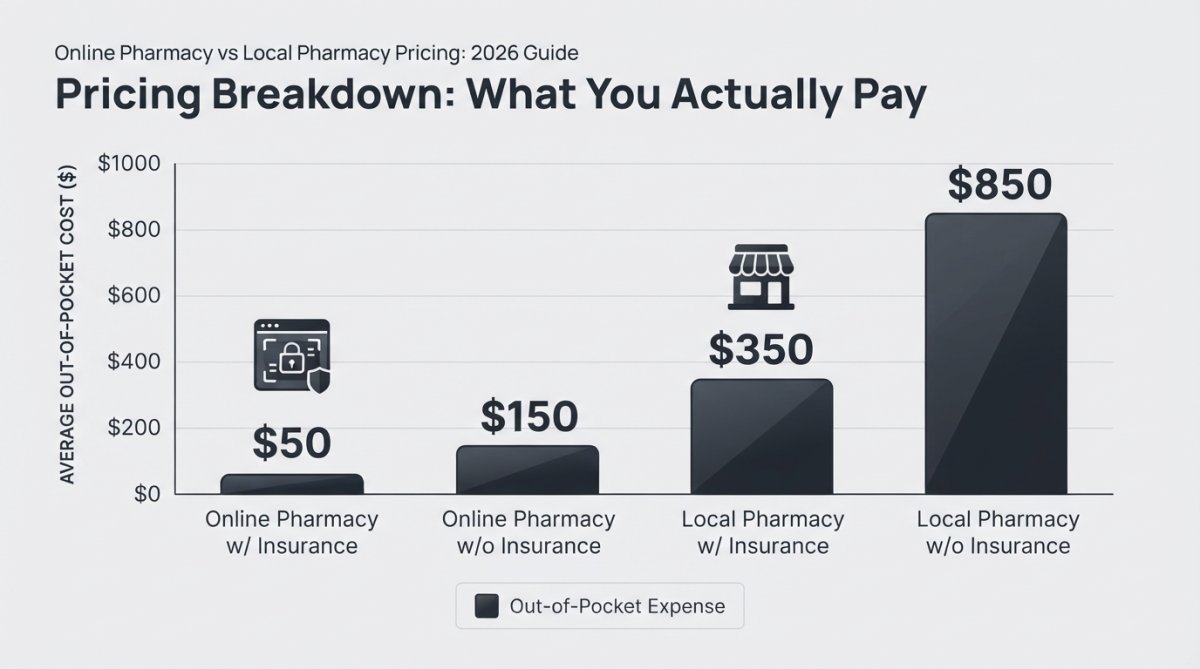
Pricing Breakdown: What You Actually Pay
Understanding your final prescription cost requires breaking down three components: the drug itself, the pharmacy's markup, and your insurance's role.
| Cost Component | Local Pharmacy | Online Pharmacy (With Insurance) | Online Pharmacy (No Insurance) |
|---|---|---|---|
| Actual drug cost | $8-$15 | $8-$15 | $8-$15 |
| Pharmacy markup | 200-300% | 50-100% | 50-100% |
| Your copay or final price | $20-$60 | $10-$40 | $5-$20 |
| Delivery cost | Included (location) | Free (mail-order) | Free (mail-order) |
Local pharmacies need 200-300% markup to cover overhead and stay profitable. Online pharmacies operate on 50-100% markup because they have minimal costs. For a generic medication that costs the pharmacy $10 to acquire, a local pharmacy might charge you $35 while an online pharmacy charges $15.
Copays and Out-of-Pocket Costs
Your copay is what your insurance says you owe, typically $10-$50 per prescription. But copays hide the actual cost negotiation happening behind the scenes. Out-of-pocket costs spike when you haven't met your deductible or when you reach the "donut hole" in Medicare Part D coverage.
This is where online pharmacies without insurance requirements become valuable. Many uninsured or underinsured patients find they pay less ordering directly from Chemistway than they would with their insurance's copay structure. For 90-day supplies, online pharmacies often charge a single, lower copay for the full supply, cutting your annual cost by 30-40% for chronic medications.
Generic vs Brand-Name Medication Pricing
Generic drugs are chemically identical to brand-name medications but cost 80-90% less. Most insurance plans push you toward generics through higher copays for brand names. Online pharmacies excel at generic pricing because they source from manufacturers directly and skip the PBM markup entirely. When you order a generic from Chemistway, you're getting the same medication your local pharmacy stocks, but without the retail overhead baked in.
Brand-name medications present a different scenario. Your insurance might only cover the generic, forcing you to pay full price for the brand name unless your doctor files for prior authorization. Online pharmacies sometimes offer brand names at lower costs than local pharmacies, especially if you're paying out-of-pocket.
Pros and Cons of Online Pharmacies
Online pharmacies solve real problems for specific patients. If you take chronic medications and value cost savings, they're often the better choice. The advantages are clear: lower prices, convenience, automatic refills, and 24/7 access to certified pharmacists.
The disadvantages matter too. Delivery takes 7-14 days, so you can't use online pharmacies for urgent medications. Some insurance plans don't work with online pharmacies, forcing you to choose between coverage and savings.
Convenience and Home Delivery Benefits
Home delivery eliminates the pharmacy trip entirely. For patients with mobility issues, chronic pain, or demanding schedules, this convenience has real value. Automatic refills compound this benefit, set it once and your medications arrive on schedule. Chemistway handles this through a simple dashboard where you control refill dates and quantities.
Safety Verification and Regulatory Risks
Legitimate online pharmacies require valid prescriptions and operate under state pharmacy board oversight. Look for VIPPS (Verified Internet Pharmacy Practice Sites) certification, which means the pharmacy has passed rigorous safety audits. VIPPS-certified pharmacies are safe; uncertified ones are a gamble.
Chemistway operates domestically with certified pharmacists and VIPPS accreditation, eliminating regulatory risks. You get the cost savings of online ordering without the uncertainty of cross-border pharmacy operations.
Benefits of Local Brick-and-Mortar Pharmacies
Local pharmacies win on immediacy and relationship. Walk in, wait 20 minutes, walk out with your medication. No planning ahead. No delivery delays. This matters when you need antibiotics for an infection or pain medication for acute injury.
The pharmacist-patient relationship is real. Your local pharmacist knows your full medication history, catches drug interactions before they happen, and can advise on side effects or dosing questions in person. For patients with complex medication regimens, this clinical service has genuine value.
Personalized Care and Pharmacist Consultation
A good pharmacist is a healthcare professional, not just a pill dispenser. They review your medications for interactions, alert you to side effects, and sometimes catch prescribing errors before you take the medication. For patients new to medication management, especially elderly patients or those managing chronic conditions for the first time, local pharmacy education matters.
Medication Synchronization and Adherence
Medication synchronization aligns all your prescription refill dates so you pick everything up once monthly instead of multiple trips. This operational simplification often improves medication adherence. Patients who skip doses or miss refills have worse health outcomes and higher emergency room visits. Anything that makes taking medications easier improves adherence and reduces overall healthcare costs.
How to Use Pharmacy Discount Programs and Pricing Tools
If your insurance copay is high, discount programs often beat it. SingleCare, Optum Perks, and similar services offer free discount cards that work at most pharmacies. Many patients find these discounts lower than their insurance copay. For uninsured patients, discount programs are often the cheapest option short of ordering from an online pharmacy.
Amazon Pharmacy's RxPass offers a different model: unlimited generic medications for a flat monthly fee if you're an Amazon Prime member. If you take multiple generics regularly, RxPass might be cheaper than insurance copays or discount programs.
Real-World Price Comparison Tool Guide
Before ordering any prescription, check prices across three sources: your insurance copay, a discount program (SingleCare or Optum Perks), and an online pharmacy. Most pharmacy websites let you check prices without creating an account.
Chemistway's pricing is transparent upfront. You see the cost per dose, the total for your quantity, and the delivery timeline before committing to anything. No surprises at checkout. For patients comparing options, this transparency makes the decision easier.
The real-world comparison often reveals that your insurance copay is the worst option. You might pay $40 with insurance when the cash price is $12 and the discount program price is $8. Especially for generic medications, cash often beats insurance.
Prescription Drug Pricing Transparency and Insurance Coverage
Drug pricing in the United States is deliberately opaque. Your insurance plan negotiates prices through PBMs, manufacturers offer rebates that you never see, and your copay bears no relationship to the actual drug cost. Recent regulations require more transparency, but the system is still designed to hide costs rather than clarify them.
Online pharmacies force transparency by necessity. They can't hide behind insurance networks, so they publish their prices. This creates pressure on local pharmacies to be more transparent too.
How Insurance Networks Affect Your Costs
Your insurance plan has a network of preferred pharmacies, usually large chains like CVS, Walgreens, or Walmart. Filling prescriptions at in-network pharmacies costs less because the pharmacy has negotiated rates with your insurance. Out-of-network pharmacies charge higher copays or require you to pay the full price.
Some online pharmacies are in-network with major insurance plans; others aren't. Check your insurance's website to see if your preferred online pharmacy is covered. The network strategy matters most for patients with high-deductible plans. Until you meet your deductible, you pay the full drug cost regardless of copay. Often the online pharmacy wins even with insurance.
Chronic Condition Management and Long-Term Savings
Chronic conditions require long-term medication management, and long-term medication costs add up fast. A patient taking blood pressure medication, diabetes medication, and cholesterol medication for 20 years might spend $50,000-$100,000 on prescriptions alone. The difference between paying $30/month and $10/month for these medications compounds to thousands in savings.
This is where online pharmacies create the most value. For patients managing chronic conditions, the cost difference between local pharmacy copays and online pharmacy prices often exceeds the value of convenience. Chemistway serves chronic condition patients specifically because the long-term savings justify the planning required for mail-order delivery.
Which Option Wins: Online vs Local Pharmacy Pricing for Your Needs
The answer depends on three factors: your insurance situation, how urgent your medication needs are, and whether you take chronic medications.
Choose local pharmacy if you need same-day medication, have complex insurance that online pharmacies don't accept, or take medications sporadically enough that convenience matters more than cost. For acute antibiotics, pain medication after surgery, or emergency prescriptions, local pharmacies win every time.
Choose online pharmacy if you take chronic medications, want to minimize costs, or live far from a pharmacy. The 7-10 day delivery time is fine for medications you refill monthly. The cost savings, often 50-70% for generics, compound over years.
The hybrid approach works best for many patients: use a local pharmacy for urgent needs and same-day prescriptions, use an online pharmacy like Chemistway for chronic medications you refill regularly. This strategy gives you convenience when you need it and savings where they matter most.
Managing prescription costs doesn't require choosing between safety and savings. The right pharmacy, whether online or local, matches your specific needs and budget. For patients taking chronic medications, NABP-accredited online pharmacies like Chemistway eliminate the overhead costs that inflate local pharmacy prices while maintaining the same safety standards and certified pharmacist support. Create a free account to compare your current medication costs against transparent pricing, access automatic refills that eliminate last-minute pharmacy trips, and connect with 24/7 certified pharmacists who review your full medication profile. The savings often exceed $500 annually for patients on multiple chronic medications, money that matters when healthcare costs keep rising.
Frequently Asked Questions
Are online pharmacies generally cheaper than local pharmacies?
Online pharmacies often offer lower prices due to reduced overhead costs, but the final price depends on your insurance coverage, the specific medication, and whether you use generic or brand-name drugs. With insurance, local pharmacy copays may sometimes beat online prices. Without insurance, online pharmacies and mail-order services typically provide significant savings, especially for chronic condition management and 90-day supplies. Comparing prices using pharmacy discount programs before purchasing is essential.
How do pharmacy discount programs reduce online prescription costs?
Pharmacy discount programs negotiate lower rates directly with pharmacies, bypassing insurance. Tools like SingleCare and Optum Perks allow you to compare prices across locations and sometimes offer savings exceeding your insurance copay. These programs work at both online and local pharmacies, making them valuable for uninsured patients or those seeking better deals. Using a price comparison tool before filling prescriptions can reveal substantial savings opportunities.
What are the safety risks of using online pharmacies versus local ones?
Safe online pharmacies require a valid prescription and are licensed by the National Association of Boards of Pharmacy (NABP) or hold VIPPS certification. Risks include unverified international pharmacies selling counterfeit medications or operating without proper licensing. Local pharmacies offer immediate verification and face-to-face pharmacist consultation. When choosing an online option, verify NABP accreditation and check that the pharmacy requires prescriptions, this protects your safety and ensures prescription drug pricing transparency.
How does insurance coverage differ between online and local pharmacies?
Most insurance plans cover both online and local pharmacies through their pharmacy benefit manager (PBM) network. However, some insurers restrict mail-order options or charge different copays for online versus in-person fills. Mail-order pharmacies often incentivize 90-day supplies with lower per-dose costs. Review your insurance plan's pharmacy network to understand copay structures. For uninsured patients, online pharmacies frequently offer lower base prices than local retailers, making them a cost-effective alternative.
What should I know about generic medications and pricing when comparing online vs local pharmacies?
Generic medications are chemically identical to brand-name drugs but cost 70-90% less. Both online and local pharmacies stock generics, but online options typically have lower overall pricing due to reduced overhead. Insurance plans usually encourage generic use through lower copays. If your medication is available in generic form, choosing it at any pharmacy, online or local, provides the most significant savings. Many online pharmacies specialize in affordable generics for chronic conditions.
This article was written using GrandRanker


0 Kommentare