

Table of Contents
- Understanding the Risks of Buying Prescription Drugs Online
- How to Verify Pharmacy License and Legitimacy
- Red Flags That Signal an Unsafe Online Pharmacy
- Steps to Safely Order Medication Online
- Medication Quality and Regulatory Compliance
- International Shipping Risks and Customs Considerations
- Conclusion
Last Updated: August 7, 2026
Understanding the Risks of Buying Prescription Drugs Online
Purchasing prescription medications online offers convenience but carries real risks. The landscape includes predatory operators, counterfeit suppliers, and data thieves. Understanding these dangers enables safe online pharmacy use.
Unsafe online pharmacies expose you to multiple threats: medications containing wrong ingredients, dangerous contaminants, or no active pharmaceutical ingredients; harvested personal data sold to third parties; and compromised identity. The stakes are high because counterfeit tablets look identical to legitimate ones, and substandard drugs show no immediate signs of failure.
Counterfeit and Substandard Medications
Counterfeit medications are fake drugs manufactured to mimic legitimate pharmaceuticals, containing incorrect active ingredients, harmful fillers, or nothing therapeutic. Substandard drugs are real medications with quality control failures, wrong dosages, degraded ingredients, or contamination.
Both pose serious health risks. A counterfeit heart medication might trigger a cardiac event. A substandard antibiotic with insufficient active pharmaceutical ingredients allows bacterial infections to progress unchecked. When counterfeit drugs circulate, they undermine treatment effectiveness across populations, patients on fake antimicrobials develop resistant infections, and those on counterfeit anticoagulants face stroke risk.
Unsafe online pharmacies source these drugs from unregulated manufacturers, often in countries with minimal pharmaceutical oversight, bypassing quality assurance entirely.
Identity Theft and Data Privacy Concerns
Online pharmacies collect sensitive data: name, address, phone, email, prescription details, medical history, and payment information. Unsafe pharmacies treat this as a commodity, selling it to data brokers or exposing it in breaches. Your prescription history reveals intimate health details that employers, insurers, or malicious actors could weaponize.
Unsafe pharmacies use unencrypted connections, unsecured servers, and no access controls. Legitimate online pharmacies use secure payment gateways, encrypt all data transmission, and follow HIPAA-equivalent privacy standards, never selling your information without consent.
How to Verify Pharmacy License and Legitimacy
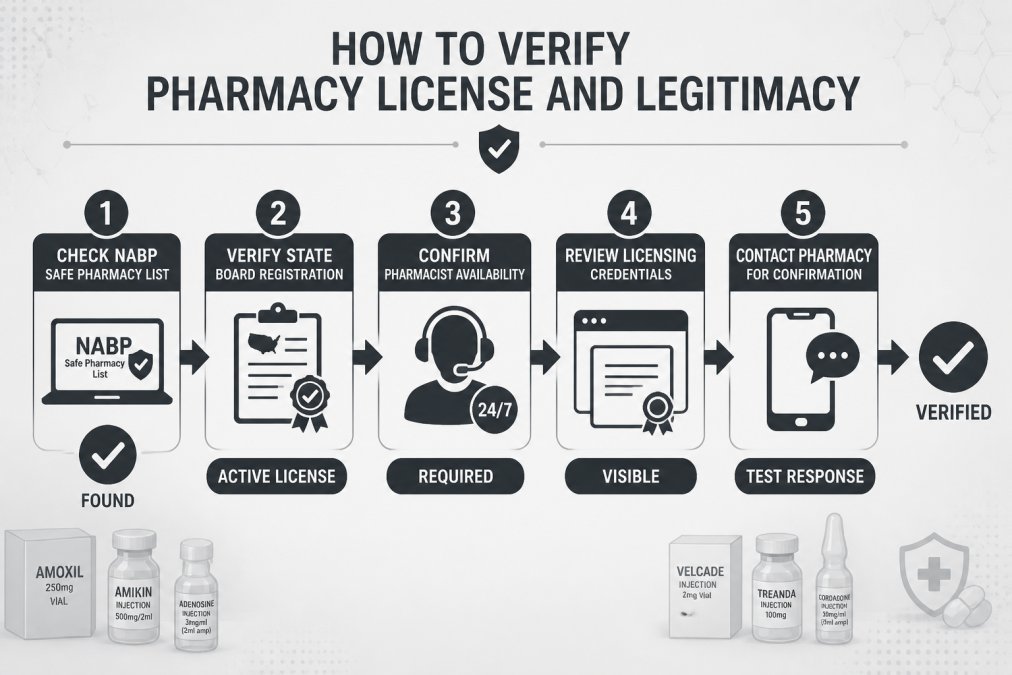
Before entering payment information or sharing prescription details, verify the pharmacy is licensed and legitimate. This is the single most important step in safe online medication purchasing.
Checking the NABP Safe Pharmacy List
The National Association of Boards of Pharmacy (NABP) maintains a publicly searchable list of licensed online pharmacies meeting regulatory standards.
Visit the NABP's Verified Internet Pharmacy Practice Sites (VIPPS) directory. Search for the pharmacy by name or website. If it appears with a current certification date, the pharmacy has passed inspection and maintains compliance. If the pharmacy does NOT appear, stop, do not proceed.
The VIPPS program verifies that pharmacies hold valid state licenses, employ licensed pharmacists, maintain secure customer data systems, operate transparent pricing, and verify prescriptions before dispensing. NABP-certified pharmacies are accountable to state boards and federal regulators.
State Board of Pharmacy Verification
Every state maintains a board of pharmacy that licenses and regulates pharmacies operating within its borders. Visit your state's board of pharmacy website and search their licensure database. Confirm the pharmacy name matches exactly, the license shows "active" status, the pharmacist-in-charge is named and licensed, and the license hasn't expired.
If you cannot find the pharmacy in your state's database or the license shows "inactive" or "revoked," that's a critical warning.
Red Flags That Signal an Unsafe Online Pharmacy
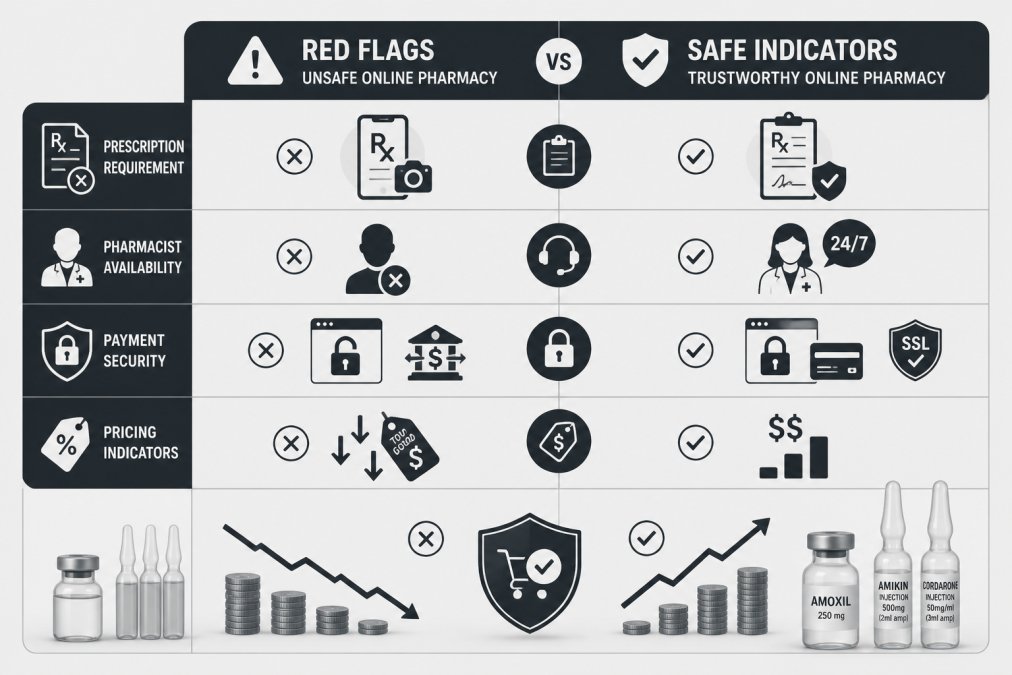
Certain warning signs indicate an online pharmacy is operating illegally or unethically.
No Prescription Requirement
A pharmacy selling prescription medications without requiring a valid prescription is operating illegally. Prescription medications require clinical oversight, a licensed practitioner must evaluate your medical history, current medications, and health status before dispensing.
An unsafe online pharmacy markets "no prescription required" as a convenience feature. A legitimate online pharmacy always requires a valid prescription, though they may offer telehealth consultations to help you obtain one.
Suspicious Pricing and Payment Methods
Impossibly low prices often indicate counterfeit products. Legitimate online pharmacies operate within market ranges; they may offer discounts through generics or bulk pricing, but they don't undercut all competitors by 80%.
Suspicious payment methods, wire transfers, cryptocurrency, gift cards, are essentially irreversible. If you receive counterfeit or no product, you have no recourse. Legitimate pharmacies accept credit cards, debit cards, and secure payment processors. Also watch for pharmacies demanding payment upfront before pharmacist verification.
Steps to Safely Order Medication Online
Step 1: Verify the Pharmacy's License and Credentials
Complete the verification steps outlined above. Check the NABP VIPPS list and your state board of pharmacy database. Look for trust signals on the pharmacy's website: NABP VIPPS seal, state board license number, physical address and phone number, clear privacy policy, and pharmacist credentials and availability.
Step 2: Ensure You Have a Valid Prescription
You need a prescription from a licensed practitioner, a doctor, nurse practitioner, or physician assistant. The prescription must be current and written for you specifically.
If you don't have a doctor, some online pharmacies partner with telehealth services connecting you with licensed practitioners who can evaluate your condition and write a prescription if appropriate. The pharmacy should request the prescription directly from your doctor's office, ask you to upload a scanned copy, or accept a physical prescription you mail in. They should NOT ask you to describe your condition or self-diagnose.
Step 3: Check for Pharmacist Consultation
A legitimate online pharmacy makes a licensed pharmacist available to review your prescription and answer questions via chat, email, or phone, with 24/7 or clearly posted availability.
Before your order is filled, the pharmacist should review your prescription for accuracy, check for drug interactions, confirm your dosage is appropriate, and answer questions about side effects, storage, or usage. At Chemistway, certified pharmacists are available around the clock to review prescriptions, answer medication questions, and ensure you understand your treatment plan.
Step 4: Protect Your Personal and Financial Information
Use a secure, password-protected internet connection (not public WiFi). Verify the website uses HTTPS encryption (look for the padlock icon). Create a strong, unique password and enable two-factor authentication if available. Never share prescription or personal information via email or unsecured messaging. Review the pharmacy's privacy policy before providing data. Don't save payment information unless you trust the security.
If the website doesn't use HTTPS encryption, do not enter any personal information.
Step 5: Review Your Prescription Before Delivery
When your medication arrives, verify the medication name matches your prescription, check the dosage against your prescription, inspect packaging for tampering or damage, check the expiration date, and review the label for correct instructions and warnings.
If anything doesn't match your prescription, contact the pharmacy immediately. Review any printed information about side effects and drug interactions, and contact the pharmacy's pharmacist if you notice potential interactions with other medications.
Medication Quality and Regulatory Compliance
Legitimate online pharmacies source medications from regulated manufacturers and wholesalers.
Understanding Active Pharmaceutical Ingredients
An active pharmaceutical ingredient (API) is the chemical compound producing the therapeutic effect. A tablet labeled "metformin 500mg" contains 500 milligrams of metformin. Counterfeit and substandard medications often contain incorrect or missing APIs.
Legitimate online pharmacies source medications from manufacturers that produce according to FDA or equivalent international standards, test every batch for API content and purity, maintain detailed manufacturing records, hold valid pharmaceutical manufacturing licenses, and submit to regulatory inspections.
Drug Supply Chain Integrity
Legitimate pharmacies maintain supply chain integrity: medications sourced directly from licensed manufacturers or licensed wholesale distributors, chain of custody documented at each transfer point, storage conditions controlled, medications not repackaged or relabeled, expiration dates respected, and products not diverted from legitimate channels.
When you order from a verified legitimate online pharmacy, you can trace the medication back to a licensed manufacturer.
International Shipping Risks and Customs Considerations
If ordering from an international online pharmacy, additional risks emerge. Medications entering the United States must comply with FDA regulations. Personal importation of prescription medications is legal under specific conditions:
- The medication must be for personal use (not for sale or distribution)
- The quantity must be a reasonable personal supply (typically a 90-day supply)
- The medication must be FDA-approved or a legitimate medication from a country with comparable safety standards
- You must have a valid prescription
If your international shipment is flagged by customs, it can be held indefinitely or returned. Legitimate international pharmacies understand these regulations and help customers navigate them.
Chemistway, for instance, offers fast and discreet worldwide shipping while managing customs compliance, so patients in remote areas can receive medications reliably without extended delays or seizures.
When ordering internationally, verify the pharmacy understands U.S. customs regulations, provides guidance on importation limits, has a track record of successful international delivery, and offers customer support if customs holds your order.
The safety of online pharmacy medication depends entirely on choosing a legitimate, verified provider. Counterfeit and substandard drugs pose genuine health risks, and unsafe pharmacies compromise your data privacy and financial security. Before placing an order, verify the pharmacy through the NABP VIPPS list and your state board of pharmacy. Ensure a licensed pharmacist reviews your prescription. Protect your personal information with secure connections and strong passwords. Inspect your medication when it arrives.
If you're seeking a trusted online pharmacy with verified legitimacy, transparent licensing, and round-the-clock pharmacist support, Chemistway provides certified pharmaceutical services with secure data handling, automatic refills, and expert health advice available 24/7. Create a free account and experience a safer, more convenient way to manage your medications from home.
Frequently Asked Questions
How do I know if an online pharmacy is safe?
Check if the pharmacy appears on the NABP safe pharmacy list, verify its state board of pharmacy license, confirm a licensed pharmacist is available for consultation, and ensure it requires a valid prescription from a legitimate practitioner. Avoid sites that sell prescription medications without requiring a prescription or that don't display clear licensing information. Legitimate online pharmacies display their credentials prominently and allow you to verify their status independently.
What are the dangers of buying prescription drugs online?
The primary risks include receiving counterfeit or substandard medications that lack proper active pharmaceutical ingredients, exposing your personal and financial information to identity theft on unsecured websites, and purchasing controlled substances illegally without clinical oversight. Fraudulent websites may sell unapproved ingredients or medications with incorrect dosages, leading to adverse reactions or drug interactions. Additionally, international shipping may result in packages being held at customs or confiscated, delaying critical medication access.
How can I verify a pharmacy's license in the United States?
Use the NABP safe pharmacy list at their official website to check if the pharmacy is verified. You can also contact your state board of pharmacy directly to confirm the pharmacy's registration and licensing status. Request the pharmacy's DEA and state pharmacy license numbers and verify them independently. Legitimate pharmacies will provide this information readily and allow you to cross-reference their credentials with regulatory bodies. Never rely solely on the pharmacy's own website for verification.
Why should I avoid pharmacies that don't require a prescription?
Pharmacies that sell prescription medications without requiring a valid prescription from a licensed practitioner are operating illegally and pose serious public health risks. They bypass the clinical oversight that ensures medication safety and appropriateness for your specific medical history. Without a prescription requirement, there is no verification of your identity, no check for drug interactions with other medications you take, and no pharmacist consultation to assess whether the medication is suitable for you. This increases the risk of adverse reactions and misuse of controlled substances.
This article was written using GrandRanker


0 comments