

Table of Contents
- Why Patients Seek Pharmacy Alternatives
- How to Identify Safe Online Pharmacies and NABP Accredited Pharmacies
- Top Pharmacy Alternatives: Comparison and Features
- Patient Assistance Programs for Medications
- Safety Protocols and Avoiding Fraudulent Internet Pharmacies
- How to Get Started with a Pharmacy Alternative
- Conclusion
Last Updated: August 12, 2026
Why Patients Seek Pharmacy Alternatives
Patients turn to pharmacy alternatives for straightforward reasons: cost, convenience, and access. Traditional retail pharmacies often charge full retail prices, require in-person visits, and sometimes lack the medications patients need. For individuals with chronic conditions requiring regular refills, those barriers add up quickly, both financially and logistically.
The healthcare landscape has shifted. Many people now manage prescriptions without insurance, face high deductibles that make copays painful, or live in areas where pharmacy access is limited. Online pharmacy alternatives, discount programs, and patient assistance programs have emerged as legitimate solutions to these real problems.
What separates a viable pharmacy alternative from a risky one comes down to verification, regulatory compliance, and pharmacist oversight. This guide from Chemistway breaks down how to identify safe options, compare different approaches, and get started with a pharmacy alternative that actually works for your situation.
How to Identify Safe Online Pharmacies and NABP Accredited Pharmacies
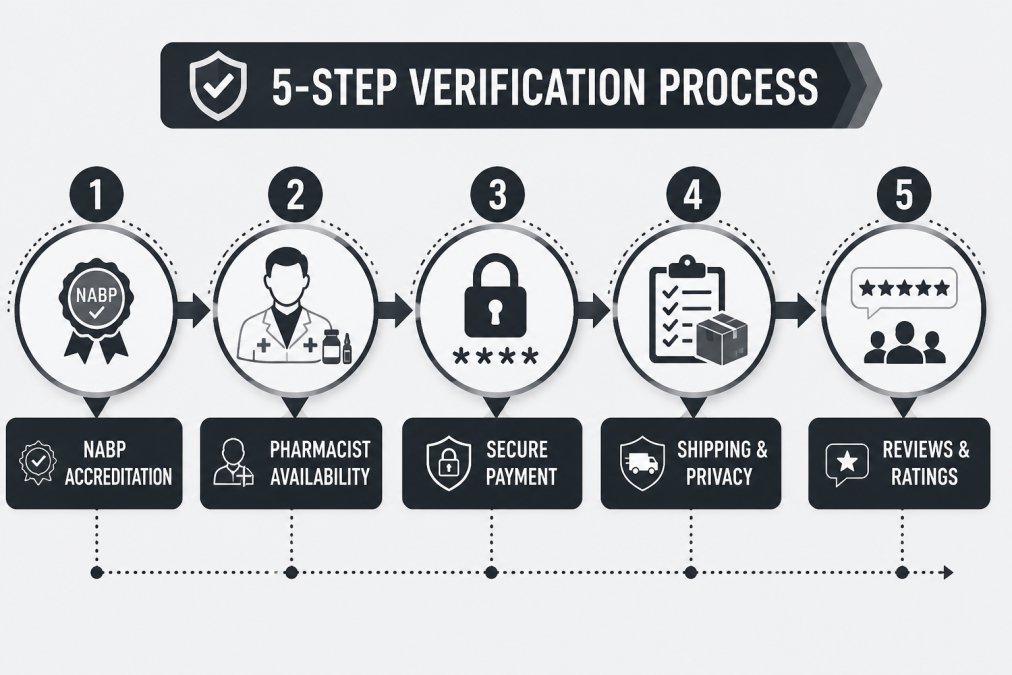
The first rule of online pharmacy safety is simple: verify accreditation before placing an order. NABP accredited pharmacies meet established standards for licensing, prescription verification, and data protection. The National Association of Boards of Pharmacy (NABP) maintains a searchable database of verified pharmacies, this is your first checkpoint.
A legitimate online pharmacy displays its NABP accreditation badge prominently and provides a license number you can cross-reference. It requires a valid prescription from a licensed provider, never sells controlled substances without proper documentation, and offers secure encrypted payment processing. The pharmacist on staff should be available for consultation, either through chat, phone, or email.
Fraudulent sites skip these steps entirely. They sell prescription medications without requiring prescriptions, offer unrealistic pricing with no explanation, use vague or missing contact information, and pressure you to complete transactions quickly. These red flags exist for a reason: they protect you from counterfeit drugs, identity theft, and financial loss.
Verification Checklist for New Users
Before placing your first order with any online pharmacy, work through this checklist:
- Confirm NABP accreditation by searching the official NABP database
- Verify the pharmacy's state license number matches official records
- Check that a licensed pharmacist is available for consultation
- Confirm the site uses HTTPS encryption (look for the padlock icon)
- Review customer testimonials on independent review platforms
- Confirm the pharmacy requires a valid prescription from your provider
- Verify shipping policies, delivery timeframes, and tracking options
- Check the privacy policy to understand how your data is protected
- Confirm return and refund policies in writing before ordering
Top Pharmacy Alternatives: Comparison and Features
The alternatives to traditional pharmacies fall into distinct categories: international pharmacy networks, domestic discount programs, patient assistance programs, and hybrid models that combine multiple approaches. Each serves different needs based on your insurance status, medication type, and budget.
Online Pharmacy Services with Certified Pharmacist Support
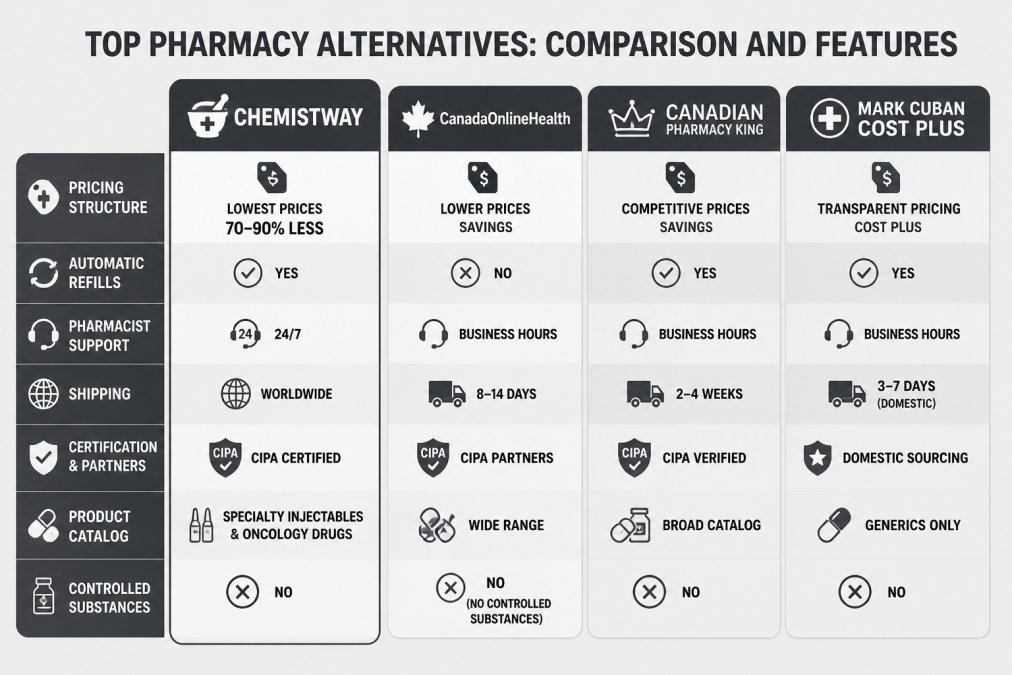
Chemistway stands out as a comprehensive online pharmacy alternative delivering high-quality generic medications directly to your door with 24/7 certified pharmacist support. The platform offers automatic refills, convenient online prescription management, and significant cost savings, particularly on generic and specialty medications. For patients managing chronic conditions, the combination of affordable pricing, expert pharmacist access, and reliable delivery eliminates the friction of traditional pharmacy visits.
CanadaOnlineHealth connects patients with CIPA-certified Canadian and international pharmacy partners. The service accepts prescriptions from U.S. providers and ships to addresses across the country. Delivery typically takes 8-14 business days, but the access to lower-priced medications from verified international pharmacies makes the wait worthwhile for many patients. The platform cannot import controlled substances, so it works best for chronic maintenance medications and common prescriptions.
Canadian Pharmacy King operates similarly to CanadaOnlineHealth but emphasizes customer service and a broader medication catalog. It's CIPA-verified and offers competitive pricing on both brand and generic drugs. Patients report reliable delivery and helpful support staff, though international shipping adds time to the process compared to domestic alternatives.
Mark Cuban Cost Plus Drug Company takes a different approach entirely. Instead of importing from international sources, it manufactures or sources generic medications domestically and prices them transparently: manufacturer's cost plus 15% markup plus a flat $5 pharmacy labor fee. This model works exceptionally well for patients without insurance or those with high-deductible plans. The catch: you need a new prescription sent to their pharmacy partner, and they focus primarily on generic medications.
Prescription Discount Cards vs Insurance: Which Works Better
Prescription discount cards like SingleCare, Blink Health, RxSaver, and ScriptSave WellRx operate as free or low-cost membership programs that negotiate discounts with pharmacies. You present the card or code at checkout and receive a discounted price. These programs typically save a significant percentage on prescriptions, sometimes reaching higher percentages on specific medications.
The advantage: no membership fees, immediate access, and compatibility with most major pharmacy chains. The disadvantage: savings vary by medication and location, the discount doesn't count toward insurance deductibles, and you're paying out-of-pocket for every prescription.
Insurance, by contrast, spreads costs across a pool and typically covers a percentage of medication costs after you meet your deductible. Once you've paid your deductible, insurance usually covers a larger share of subsequent prescriptions. The trade-off is monthly premiums and potential prior authorization requirements that delay access to certain medications.
Which works better depends on your situation. Uninsured patients almost always benefit from discount cards, they're free and immediately accessible. Insured patients should compare: calculate your annual medication costs with your insurance copays versus the same medications with a discount card. For patients with high-deductible plans, discount cards often beat insurance until the deductible is met, then insurance takes over.
Many patients use both strategically. They use discount cards for prescriptions before meeting their deductible, then switch to insurance once the deductible is satisfied and insurance covers a higher percentage.
Patient Assistance Programs for Medications
Pharmaceutical manufacturers operate patient assistance programs that provide free or heavily discounted medications to eligible patients. These programs exist because manufacturers benefit from long-term patient loyalty and compliance, if a patient can't afford their medication, they'll either stop taking it or switch to a competitor's product.
Eligibility typically depends on income, insurance status, and the specific medication. A patient without insurance earning below a certain threshold might qualify for a free supply of a brand-name drug, while an insured patient with high out-of-pocket costs might qualify for copay assistance. The application process varies by manufacturer but generally involves completing a form and providing proof of income.
The challenge is finding these programs. Most patients don't know they exist, and manufacturers don't advertise them widely. Websites like NeedyMeds.org, Pharmaceutical Research and Manufacturers of America (PhRMA), and individual manufacturer websites maintain searchable databases. Patient advocacy organizations specific to certain conditions often maintain lists of programs relevant to their community.
For patients with chronic conditions requiring expensive brand-name medications, patient assistance programs can reduce costs from thousands of dollars annually to zero. The time investment in finding and applying is worth it.
Safety Protocols and Avoiding Fraudulent Internet Pharmacies
Fraudulent pharmacies operate at scale. They use sophisticated websites that mimic legitimate competitors, employ aggressive marketing tactics, and exploit patient desperation for affordable medications. The consequences of ordering from a fraudulent site range from financial loss to receiving counterfeit or contaminated medications.
Red flags that signal a fraudulent pharmacy include: no requirement for a valid prescription, prices dramatically lower than competitors with no explanation, pressure to complete orders quickly, no verifiable contact information, and promises to cure serious diseases. These sites often operate from outside the United States and disappear once they've collected enough payments.
Protect yourself by sticking to NABP-accredited pharmacies, never sending money via wire transfer or untraceable payment methods, and verifying the pharmacy's credentials independently before placing an order. If a deal seems too good to be true, it almost certainly is.
Legitimate online pharmacies operate transparently. They display accreditation badges, provide verifiable contact information, require valid prescriptions, and explain their pricing model clearly. They don't pressure you and they don't promise miracles.
How to Get Started with a Pharmacy Alternative
Switching to a pharmacy alternative requires a few deliberate steps. The process is straightforward, but rushing through it creates problems. Taking time upfront to verify the pharmacy and organize your prescriptions pays dividends in reliability and peace of mind.
Step-by-Step Setup Process
Step 1: Choose Your Alternative and Verify Accreditation (Time: 10 minutes)
Start by identifying which type of alternative fits your situation. If you're uninsured, compare discount card programs or online pharmacies like Chemistway. If you have insurance, calculate whether a discount card saves money before your deductible. If you're taking expensive brand-name medications, research patient assistance programs first.
Once you've identified a pharmacy or program, verify its credentials. Search the NABP database, check state pharmacy board records, and read independent reviews. This step prevents costly mistakes.
Step 2: Gather Your Prescription Information (Time: 15 minutes)
Compile a list of all current medications: the drug name, strength, dosage, frequency, and your prescriber's name and contact information. Include over-the-counter medications and supplements, your pharmacist needs this information to check for interactions.
If you're switching from a retail pharmacy, request your medication history from your current pharmacy. This information helps the new pharmacy understand your medical context.
Step 3: Contact Your Prescriber (Time: 20 minutes)
Call your doctor's office and request that they send prescriptions to your chosen pharmacy. Some prescribers are unfamiliar with online pharmacies and may hesitate, explain that the pharmacy is NABP-accredited and operates legally. Provide the pharmacy's contact information and fax number if available.
For patients using Chemistway or similar services, the pharmacy's certified pharmacists can often facilitate communication with prescribers on your behalf. Ask if this service is available.
Step 4: Create Your Account and Place Your First Order (Time: 15 minutes)
Register with your chosen pharmacy or program. Provide accurate contact information, shipping address, and payment method. Review the privacy policy to understand how your data is protected.
Place your first order with a single prescription. This allows you to verify the ordering process, confirm delivery, and assess the pharmacy's service quality before committing all your prescriptions.
Step 5: Set Up Automatic Refills (Time: 10 minutes)
Once your first order arrives and you're satisfied with the service, set up automatic refills for maintenance medications. Most online pharmacies offer this feature, it ensures you never run out and eliminates the need to remember refill dates.
Review your automatic refill schedule monthly. Adjust timing if your usage changes or if you're trying a new medication.
| Step | Time Required | Key Action |
|---|---|---|
| Choose alternative and verify | 10 minutes | Search NABP database, check credentials |
| Gather prescription info | 15 minutes | Compile medication list and medical history |
| Contact prescriber | 20 minutes | Request prescriptions be sent to new pharmacy |
| Create account and order | 15 minutes | Register, provide contact/payment info, place test order |
| Set up automatic refills | 10 minutes | Enable refills for maintenance medications |
Choosing a pharmacy alternative puts control back in your hands. Whether you're seeking cost savings, convenience, or access to medications unavailable locally, pharmacy alternatives deliver real solutions when you verify credentials, understand your options, and take time with setup.
Chemistway offers a particularly compelling option for patients managing chronic conditions: certified pharmacist support available 24/7, automatic refills that arrive reliably, and significant savings on both generic and specialty medications. The combination of affordability, expert guidance, and convenience addresses the core frustrations that drive patients to seek alternatives in the first place.
Start by creating a free account with your chosen pharmacy alternative. Verify credentials, gather your prescriptions, and place your first order with confidence. The process takes less than an hour, and the long-term savings and convenience make it worth the initial effort.
Frequently Asked Questions
How do I know if an online pharmacy is legitimate and safe?
Legitimate online pharmacies display NABP accreditation, require valid prescriptions from licensed providers, employ certified pharmacists available for consultation, use secure payment systems, and clearly state their licensing and location. Verify credentials through the NABP website, check for a physical address and phone number, and look for customer testimonials. Avoid pharmacies that offer controlled substances without a prescription or advertise unrealistic pricing, these are red flags for fraudulent websites.
What's the difference between prescription discount cards and insurance?
Prescription discount cards offer negotiated prices at participating pharmacies without membership fees, typically saving 20-80% on specific medications. Insurance requires monthly premiums and deductibles but may provide broader coverage over time. Discount cards work immediately, don't count toward deductibles, and suit uninsured or high-deductible patients. Insurance is better for frequent, ongoing care. Many patients use both, discount cards for medications not covered well by insurance, and insurance for regular maintenance drugs and preventive care.
Are patient assistance programs really free, or are there hidden costs?
Genuine patient assistance programs are free and funded by pharmaceutical manufacturers to help eligible patients afford medications. There are no hidden costs, programs cover the full cost of the medication for qualifying individuals. Eligibility is typically based on income and insurance status. To access them, contact the drug manufacturer directly, ask your pharmacist, or use programs like NeedyMeds or Partnership for Prescription Assistance. Be cautious of third-party services charging fees to help you apply; legitimate programs never charge application fees.
What happens if my prescription is rejected or my package is delayed?
Reputable pharmacy alternatives have customer service teams available 24/7 to address delivery issues, prescription rejections, or customs delays. Before ordering, confirm their delivery timeline guarantees and support availability. If a package is delayed, contact support immediately, they can often expedite a replacement or provide tracking updates. Legitimate pharmacies maintain communication throughout the process and have protocols for handling customs holds. Always keep receipts and order confirmations, and verify that the pharmacy offers secure delivery and clear policies on what happens if your order doesn't arrive as promised.
This article was written using GrandRanker


0 Kommentare