Why More Young Men Have Erectile Dysfunction in 2026 ?
The rise in erectile dysfunction among younger men doesn't point to one neat cause. It looks more like a traffic jam,...


Reliable shipping
Flexible returns

Our products are sourced directly from brands or authorized distributors.
If you've searched for Cabozatinib, you're not alone, that spelling is common. The prescription cancer medicine is cabozantinib. This is a plain-language product description of cabozantinib for patients and caregivers who want clear, safety-first details.
Cabozantinib is an oral targeted therapy in a drug class called tyrosine kinase inhibitors (TKIs). It works by blocking signals that help tumors grow and form new blood vessels. In the US, cabozantinib is sold as two different brand products that are not interchangeable: Cabometyx (tablets) and Cometriq (capsules). They come in different forms, strengths, and dosing, so patients should never swap them without a prescriber's direction.
Because dosing and monitoring are individualized, use this as education only. Your oncology team and pharmacist should guide decisions for your diagnosis, labs, and other medicines.
Cabozantinib is a targeted anti-cancer medicine taken by mouth. It belongs to the "kinase inhibitor" family. Many cancers rely on kinase signals to keep growing, invade nearby tissue, and recruit blood supply. Cabozantinib aims to interrupt those signals, which may slow disease progression for certain diagnoses.
In the United States, cabozantinib has FDA-approved uses that depend on the product (Cabometyx tablets versus Cometriq capsules). For the most up-to-date indication wording and limitations, see the Cabometyx FDA prescribing information (PDF).
Common FDA-approved uses include:
Oncologists may also use cabozantinib "off-label" for other cancers when clinical evidence supports it. Still, off-label use is a clinician decision and depends on risks, expected benefit, and available options.
Who might not be a good fit (topics to discuss first): Cabozantinib can raise blood pressure and affect bleeding and clotting risk. It may also stress the liver. If you have uncontrolled hypertension, active bleeding, a history of serious blood clots, or significant liver disease, bring that up early so your team can plan monitoring, dose changes, or another therapy.
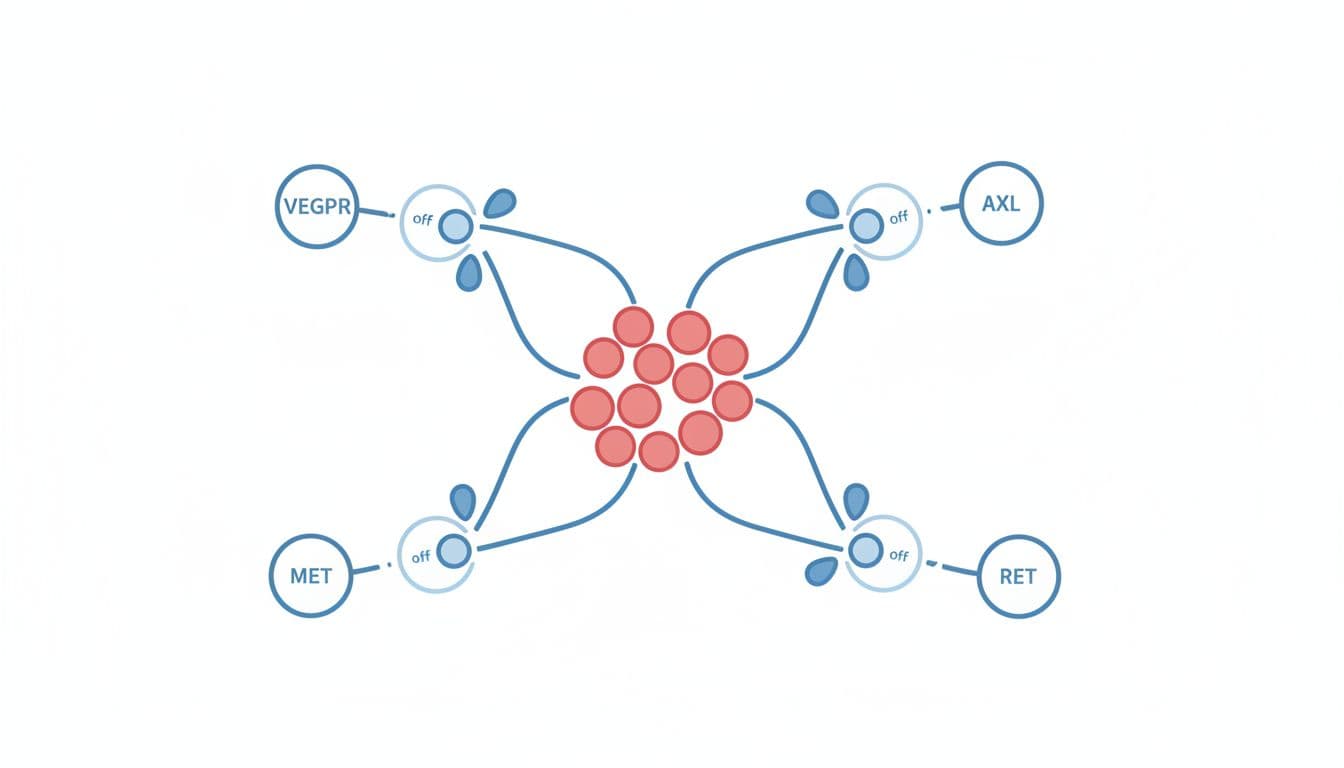
Cabozantinib blocks several "on switches" on cells, including VEGFR, MET, AXL, and RET (plus other kinases). Think of these switches like stuck buttons on a control panel. When they stay pressed, a tumor can keep getting growth signals and can build blood vessels to feed itself.
By blocking these pathways, cabozantinib can have two main effects. First, it can slow cancer cell growth and spread in tumors that rely on these signals. Second, it can reduce tumor blood supply by interfering with VEGFR-driven vessel growth. In practice, that may shrink tumors for some people or slow down progression, but responses vary and side effects often drive dose adjustments.
Cabozantinib comes as Cabometyx tablets and Cometriq capsules. Even though the active drug is the same, the products are not interchangeable. They differ in dosage form, available strengths, dosing schedules, and FDA-approved uses.
As a simple guide: Cabometyx is the tablet used for kidney cancer, liver cancer after sorafenib, some thyroid cancers, and certain neuroendocrine tumors. Cometriq is the capsule used for metastatic medullary thyroid cancer. Because dosing differs a lot, mixing them up can cause underdosing or dangerous overdosing. For example, Cometriq labeling includes boxed warnings related to serious bleeding and GI perforation and fistula risk, outlined in the Cometriq FDA label (PDF).
Safety habit that helps: check the product name, strength, and dosage form on every refill. If anything looks different, call your pharmacy before taking the next dose.

Cabozantinib dosing depends on the product, diagnosis, other treatments, and side effects. Your prescriber sets the exact dose, and dose holds or reductions are common. The goal is to keep treatment effective while limiting harm.
Here's a high-level reference for typical adult dosing patterns (not a substitute for your prescription label):
| Product (form) | Common labeled dosing examples | Notes you'll hear from clinics |
|---|---|---|
| Cabometyx (tablet) | Often 60 mg once daily for certain cancers | Dose reductions may step down to 40 mg or 20 mg if needed |
| Cabometyx + nivolumab | Often 40 mg once daily in some first-line RCC regimens | Combination plans add immune-therapy monitoring and timing |
| Cometriq (capsule) | 140 mg per day for metastatic medullary thyroid cancer | Usually given as a daily total dose per label; not interchangeable with tablets |
For exact dosing tables and adjustment rules, your care team may reference the current Cabometyx FDA label (PDF).
How to take it:
Interactions matter because cabozantinib uses CYP3A4 metabolism. Some medicines can raise cabozantinib levels (more side effects), while others can lower levels (less effect). Grapefruit products and St. John's wort often come up in counseling for this reason. Before starting any new prescription, OTC product, or supplement, ask your pharmacist to screen it.
If your treatment plan includes another oral kinase inhibitor at a different time in your cancer journey, it may help to compare monitoring and interaction rules across drugs. For example, Chemistway also lists other targeted therapies like Tabrecta (capmatinib) 150 mg tablets, which has its own interaction and liver-test monitoring needs.
The empty-stomach rule is annoying, but it can reduce swings in drug exposure. A simple routine helps. Many people pick a consistent "quiet hour" (for example, early morning) and build the day around it.
Hydration also helps, because diarrhea and low appetite can sneak up fast. If your stools loosen, tell the clinic early. Don't wait for days. Early care often prevents bigger dose interruptions.
Skin issues can build slowly, too. Use fragrance-free moisturizer daily, and protect hands and feet from friction and heat. For example, cushioned socks and gentle shoes can reduce pressure points. Finally, check blood pressure at home if your team recommends it. High readings often show up before you feel symptoms.
Monitoring keeps therapy safer and helps your team adjust doses before problems escalate. The exact schedule differs by diagnosis and baseline health, but common checks include:
Also tell your team about planned dental work or surgery. Timing changes may be needed, but only your prescriber should direct holds and restarts.
Most people on cabozantinib notice side effects, especially during the first weeks. Some are manageable with early support and dose changes. Others are medical emergencies.
Common side effects (often treatable, but report them early):
Serious risks (need urgent medical evaluation):
If you're on cabozantinib, don't "tough it out" with red-flag symptoms. Early action can be lifesaving.
Call your doctor now or seek urgent care if you have:
Cabozantinib can also harm an unborn baby. Avoid pregnancy during treatment, and use effective birth control for the timeframe your prescriber recommends. Don't breastfeed during treatment and for the advised period after the last dose.
Because serious safety warnings can vary by product and patient factors, your team may point you to label guidance such as the Cometriq safety warnings in the FDA label (PDF).
Diarrhea and mouth soreness often show up early. Ask your clinic what to use at the first loose stool, and keep it available at home. In the meantime, bland foods, smaller meals, and steady fluids can help you keep calories in.
For mouth symptoms, a gentle rinse (your clinic may suggest salt and baking soda in water) can reduce irritation. Avoid alcohol-based mouthwashes unless your team says otherwise. When nausea hits, taking anti-nausea medicine early often works better than waiting until you feel miserable.
Hand-foot skin reaction can feel like walking on hot gravel. Moisturize often, protect pressure areas, and report pain before it limits walking or daily tasks. Dose adjustments can prevent cracks, infection, and long breaks in therapy.

Cabozantinib levels can change when you add or stop drugs that affect CYP3A4. Strong inhibitors (some antifungals and antibiotics) can raise cabozantinib exposure, while strong inducers (some seizure medicines) can lower it. Because the list is long, the safest move is simple: keep one updated medication list and share it with every prescriber and your pharmacy.
Also mention blood thinners, aspirin, and NSAIDs. They don't always need to be avoided, but bleeding risk may change your plan. If you have liver cancer, ask about alcohol limits because liver stress and dehydration can worsen side effects.
If your cancer has a RET-altered pathway, your oncologist may discuss other targeted options in the broader treatment picture. One example in the same "targeted therapy" category is Retevmo (selpercatinib) 40 mg capsules, which targets RET in certain cancers, but it's used for different diagnoses and has different rules.
Cabozantinib (often misspelled "Cabozatinib") is a targeted oral cancer medicine used for several cancers, including kidney cancer, liver cancer after sorafenib, select thyroid cancers, certain neuroendocrine tumors, and medullary thyroid cancer (with the Cometriq product). Cabometyx tablets and Cometriq capsules share the same active drug, but they're different products with different dosing and should not be swapped.
Dosing is individualized, and side effects are common. Still, many problems improve with early reporting, supportive meds, and dose adjustments. At the same time, serious warning signs like bleeding, clot symptoms, severe abdominal pain, or confusion need urgent care.
Before each refill, confirm the exact product and strength, and ask your pharmacist about interactions and monitoring. Finally, set up refill planning early so you don't miss doses during shipping or clinic schedule changes.

We do not dispense any prescription medicine without valid and legible prescription written by your local physician. All prescriptions must be presented from a valid verifiable and licensed physician.

We are only able to ship a maximum 90-day supply of your prescription.

All trademarks and registered trademarks are the property of their respective owners. The products mentioned on this website are trademarks of their respective owners and are not owned by or affiliated with this company or any of its associated companies.

The rise in erectile dysfunction among younger men doesn't point to one neat cause. It looks more like a traffic jam,...

When people ask "Does it work?", they usually mean: Will my hair come back enough that I recognize myself again? Tria...
