

Table of Contents
- Switch to Generic Medications
- Compare Pharmacy Pricing and Use Discount Programs
- Request 90-Day Supply Refills
- Explore Manufacturer Assistance Programs
- How to Use Online Pharmacies Safely
- Consult Your Healthcare Provider About Alternatives
- Optimize Your Health Insurance and Tax-Advantaged Accounts
Last Updated: August 20, 2026
Medication costs remain one of the biggest obstacles to consistent healthcare. For people managing chronic conditions, the expense of refilling prescriptions month after month can force impossible choices: skip doses, cut pills in half, or delay treatment altogether. Yet there are proven strategies to reduce drug costs without sacrificing the medications you need.
This guide from Chemistway covers seven evidence-based approaches that work for different situations. Whether you're paying out-of-pocket, navigating insurance coverage, or managing expensive specialty medications, these tactics can meaningfully lower what you spend.
Switch to Generic Medications
Generic medications contain the same active ingredients as brand-name drugs and work identically in your body. The FDA requires them to meet the same quality and safety standards. The difference is cost: generics typically cost 30-80% less than their brand-name equivalents because manufacturers skip the research and marketing expenses that drive up brand prices.
Many people hesitate to switch because they assume generic means inferior. That misconception costs them thousands annually. A generic blood pressure medication works just as well as the branded version, it just comes in a different package with a different name.
When your doctor writes a prescription, ask specifically if a generic alternative exists. Most common medications have generics available: blood pressure drugs like generic equivalents to Coversyl (perindopril), cholesterol medications like generic rosuvastatin (the active ingredient in Crestor), and countless others. If your doctor prescribed a brand name, request the generic version at the pharmacy. Many insurance plans charge lower copays for generics, which creates an additional incentive to make the switch.

The timing matters. If you're taking a brand-name medication right now, don't wait for your next refill to ask about generics. Switching immediately could save hundreds of dollars per year on a single prescription. For someone on multiple maintenance medications, the cumulative savings from choosing generics across the board often exceeds what any other single strategy delivers.
Compare Pharmacy Pricing and Use Discount Programs
Medication prices vary dramatically between pharmacies, sometimes by 50% or more for the exact same drug. A blood pressure medication that costs one price at a chain pharmacy might be substantially cheaper at an independent pharmacy, mail-order service, or online pharmacy. This variation exists because pharmacies negotiate different rates with manufacturers and pharmacy benefit managers.
Before filling any prescription, compare prices across at least three pharmacies. Call ahead or use pharmacy price-checking tools to get actual quotes. The smallest effort here, a five-minute phone call, often saves more than any other tactic.
Discount programs work differently than insurance. GoodRx and similar platforms offer negotiated rates that don't require membership or insurance eligibility. You get a discount code, present it at the pharmacy, and pay the reduced price directly. These programs work best for people without insurance, those with high deductibles, or anyone whose insurance copay exceeds the discount price.
Mail-order and online pharmacies frequently undercut retail locations because they operate with lower overhead. Prescription home delivery services like Chemistway deliver medications directly to your home, often at significantly lower costs than local pharmacies, and they handle the logistics of refills automatically. For maintenance medications you take regularly, online delivery eliminates the inconvenience of pharmacy trips while reducing costs simultaneously.
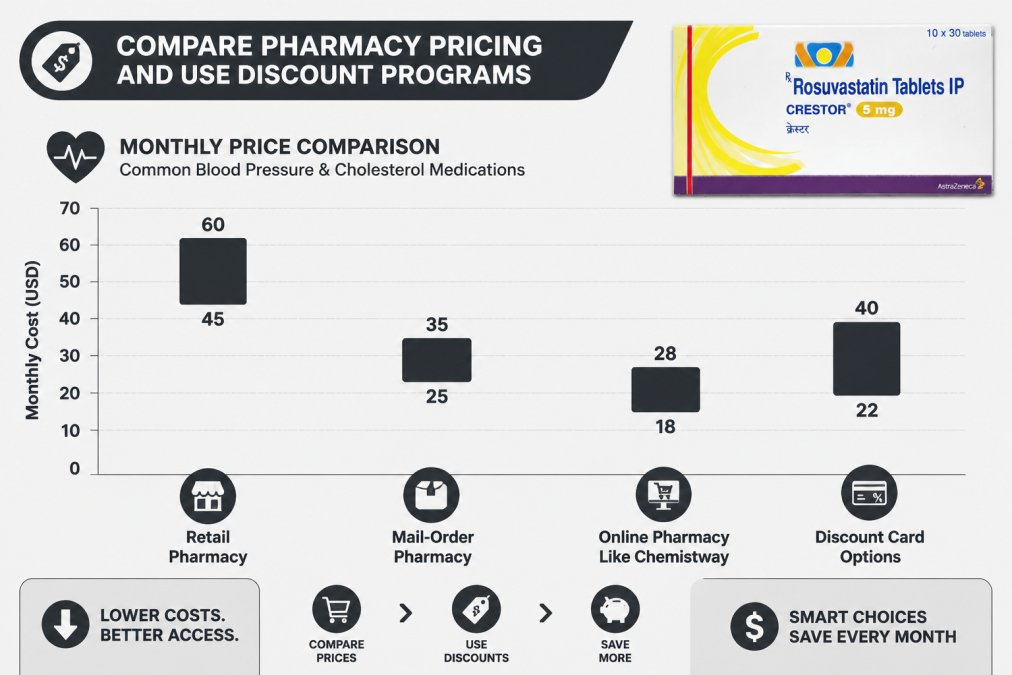
| Pharmacy Type | Price Range | Best For | Convenience |
|---|---|---|---|
| Retail chain | Varies | Immediate need, pickup same-day | High |
| Independent pharmacy | Varies | Personalized service, local support | Medium |
| Mail-order | Varies | Maintenance medications, auto-refill | High |
| Online pharmacy (Chemistway) | Varies | Cost savings, discreet delivery, 24/7 support | High |
| Discount card (GoodRx) | Varies | No insurance, high deductibles | Medium |
Request 90-Day Supply Refills
Most people refill prescriptions monthly, which means visiting the pharmacy (or ordering online) twelve times per year. Each refill incurs separate costs, sometimes a copay, sometimes a dispensing fee. Requesting a 90-day supply instead of a 30-day supply consolidates three months of medication into one transaction.
The financial benefit works two ways. First, many insurance plans charge the same copay for a 30-day supply and a 90-day supply, so you're getting three months of medication for one copay. Second, if you're paying out-of-pocket, you often receive a volume discount. A pharmacy that charges $40 per month might charge $100 for a 90-day supply, a 17% savings compared to buying monthly.
Not every medication qualifies for 90-day refills. Controlled substances and certain specialty drugs have restrictions. Your doctor or pharmacist can tell you which of your medications are eligible. For those that are, switching to 90-day refills is one of the easiest cost reductions you can make.
The logistics are simpler than you might expect. If you're using an online pharmacy with automatic refill capabilities, you never have to remember to reorder, your medication arrives on schedule without any additional effort. If you're using a retail pharmacy, ask the pharmacist to set up a 90-day refill schedule for eligible medications.
Explore Manufacturer Assistance Programs
Pharmaceutical manufacturers operate patient assistance programs that provide free or reduced-cost medications to people who qualify financially. These programs exist for both brand-name and generic drugs, including expensive specialty medications. Many people never discover them because manufacturers don't advertise widely, you have to ask.
Eligibility typically depends on income. A program might provide free medication to someone earning below 200% of the federal poverty line, or it might have higher income thresholds. Some programs don't have income limits at all; they focus on people without insurance or with insurance that doesn't cover the medication.
The application process varies by manufacturer. Some require paperwork; others handle everything online. Turnaround time typically ranges from one to three weeks. Once approved, you receive medication directly from the manufacturer, bypassing the pharmacy entirely.
To find relevant programs, start with your medication's manufacturer. Most pharmaceutical companies have dedicated pages listing their assistance programs. Your doctor's office or pharmacist can also help identify programs for your specific medications. Patient advocacy organizations focused on particular conditions often maintain lists of assistance programs relevant to that condition.
For expensive medications, particularly specialty drugs for cancer, biologics, or rare conditions, manufacturer assistance programs can reduce costs from thousands of dollars to nothing. Even for common medications, these programs eliminate out-of-pocket expenses for people who qualify.
How to Use Online Pharmacies Safely
Online pharmacies offer significant cost savings, but safety requires caution. Legitimate online pharmacies are licensed, require valid prescriptions, and operate transparently. Fraudulent operations sell counterfeit or substandard medications, steal personal information, or simply take your money without sending anything.
Verify legitimacy before placing an order. Licensed online pharmacies display their pharmacy license number and are registered with state pharmacy boards. Check the National Association of Boards of Pharmacy (NABP) website to confirm licensing. Legitimate pharmacies require a valid prescription from a licensed healthcare provider, they never sell prescription medications without one.
Chemistway exemplifies the legitimate online pharmacy model. The service requires prescriptions, employs certified pharmacists available 24/7 for questions, and provides secure prescription management with or without insurance. Automatic refills ensure you never run out of maintenance medications, and worldwide shipping includes discreet packaging for privacy-sensitive medications.
Red flags indicate fraudulent operations: prices that seem impossibly cheap (cheaper than any legitimate pharmacy), no requirement for a prescription, pressure to buy large quantities, or vague information about the company's location and licensing. Avoid any site that doesn't clearly display contact information or licensing credentials.
When you've confirmed legitimacy, online pharmacies deliver genuine cost savings. The combination of lower overhead and competitive pricing means you're genuinely paying less, not risking your health or privacy.
Consult Your Healthcare Provider About Alternatives
Sometimes the most expensive medication isn't the best choice for your situation. Your doctor may have prescribed a particular drug because it works well for most patients, but alternatives exist that work equally well at lower cost.
Start this conversation by being direct: tell your doctor you're concerned about medication costs and ask if alternatives exist. Don't skip doses or stop taking medication to save money, that approach creates health problems that cost far more to treat. Instead, work with your doctor to find solutions.
Therapeutic alternatives are different medications that treat the same condition. For high blood pressure, multiple drug classes work: ACE inhibitors, calcium channel blockers, diuretics, and others. One class might cost significantly less than another while providing equivalent blood pressure control. Your doctor can switch you to a more affordable option if your current medication is working but the cost is unsustainable.
Prior authorization hurdles sometimes block access to cheaper alternatives. Insurance companies require doctors to document that you've tried a more expensive medication first before approving coverage for a less expensive one. This backwards system prioritizes insurance company profits over patient costs. When you encounter this barrier, ask your doctor to appeal the decision or request an exception. Many insurers reverse these denials when doctors provide clinical justification.
The relationship between you and your doctor is the foundation for cost management. Doctors who understand your financial constraints can make prescribing decisions that work for your health AND your budget.
Optimize Your Health Insurance and Tax-Advantaged Accounts
Understanding your insurance plan's structure reveals hidden opportunities to reduce costs. Most plans include a deductible (the amount you pay before insurance kicks in), copays (fixed amounts per prescription), and coinsurance (a percentage of the cost you pay). Your out-of-pocket maximum caps total spending in a year.
If you have a high-deductible health plan, you likely qualify for a Health Savings Account (HSA). HSAs offer triple tax advantages: contributions are tax-deductible, growth is tax-free, and withdrawals for qualified medical expenses, including medications, are tax-free. For someone spending thousands annually on prescriptions, an HSA transforms that spending into pre-tax dollars, reducing your effective cost by 22-37% depending on your tax bracket.
Flexible Spending Accounts (FSAs) work similarly but with different rules. FSA contributions are also pre-tax, and you can use them for medications and other medical expenses. Unlike HSAs, FSAs have "use it or lose it" rules, unused funds don't roll over. Plan carefully to avoid forfeiting money.
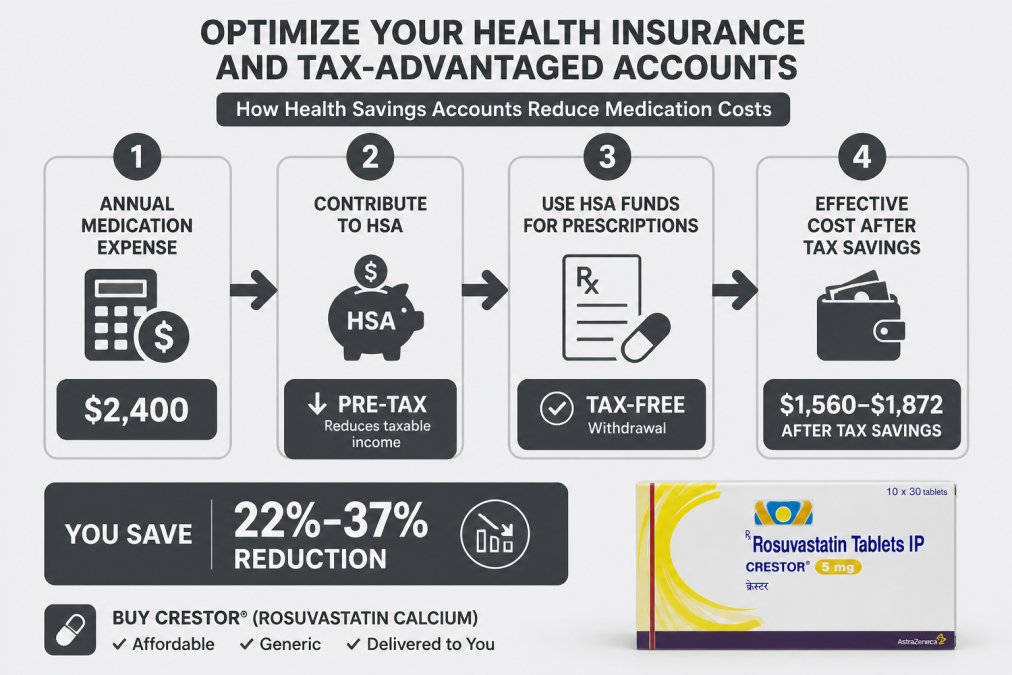
Timing prescriptions strategically around your deductible and out-of-pocket maximum matters. If you haven't met your deductible yet, paying cash at an online pharmacy might cost less than your insurance copay. Once you've met your deductible, using insurance makes sense. After hitting your out-of-pocket maximum, your insurance covers everything, so fill as many prescriptions as you need without worrying about cost.
Some people benefit from switching insurance plans during open enrollment. If you spend heavily on medications, a plan with higher premiums but lower copays might cost less overall than a cheaper plan with high copays. Run the numbers for your specific medications before renewing.
Reducing drug costs requires action, but the strategies that work best don't require sacrificing health or convenience. Switching to generics, comparing prices, using 90-day refills, and exploring manufacturer assistance programs address the cost problem directly. Prescription home delivery services eliminate the friction of retail pharmacy visits while delivering genuine savings through lower overhead and competitive pricing. For expensive medications, these approaches combined often reduce annual costs significantly.
The conversation with your healthcare provider matters most. A doctor who understands your financial constraints can help you navigate insurance barriers, find therapeutic alternatives, and make prescribing decisions that work for your situation. Your health depends on taking medications consistently, cost-reduction strategies only work if they make that consistency sustainable.
Start with the approach that addresses your biggest cost driver. If you're paying for brand-name medications, switch to generics. If you're refilling monthly, request 90-day supplies. If you're uninsured or underinsured, explore manufacturer assistance programs or online pharmacy options. Small changes compound: a 30% reduction on one medication, combined with a 40% reduction on another, and a 50% reduction on a third, transforms your total medication expense.
FDA guidance on generic medications and bioequivalence
National Association of Boards of Pharmacy online pharmacy verification
HHS information on Health Savings Accounts and tax advantages
Frequently Asked Questions
Are generic medications as effective as brand-name drugs?
Yes. The FDA requires generic medications to have the same active ingredient, strength, dosage form, and route of administration as brand-name drugs. They work identically in your body. The main difference is cost, generics are typically 70-90% less expensive because manufacturers don't repeat the original research and marketing. If you take a generic version of your current medication, you'll experience the same therapeutic effect at a fraction of the price.
How can I find patient assistance programs for cancer drugs?
Most pharmaceutical manufacturers offer patient assistance programs for expensive medications, including cancer drugs. Contact the drug manufacturer directly, ask your oncologist's office for resources, or visit websites like NeedyMeds.org and CancerCare.org. Many programs provide free or reduced-cost medications based on income. For example, patients taking high-cost cancer therapies can qualify for assistance that covers 100% of the cost. Start by asking your healthcare provider which programs apply to your specific medication.
What should I look for when choosing an online pharmacy?
Verify that the online pharmacy is licensed and requires a valid prescription from a licensed healthcare provider. Check for VIPPS (Verified Internet Pharmacy Practice Sites) certification, secure payment options, and a physical address and phone number. Avoid pharmacies that don't require prescriptions or offer suspiciously low prices. Reputable online pharmacies like Chemistway provide 24/7 access to certified pharmacists, automatic refill options, and fast, discreet shipping, making it easy to manage your medications safely from home.
Can I reduce drug costs without switching medications?
Yes. Request a 90-day supply instead of 30-day refills, this often costs less per dose and reduces the number of pharmacy visits. Ask your doctor about therapeutic alternatives in the same drug class that may be cheaper. Use prescription discount programs like GoodRx or manufacturer coupons, even if you have insurance. Check your health plan's formulary to confirm your medication is covered, and consider mail-order or online pharmacy options, which typically offer lower prices than retail pharmacies.
This article was written using GrandRanker


0 comments